
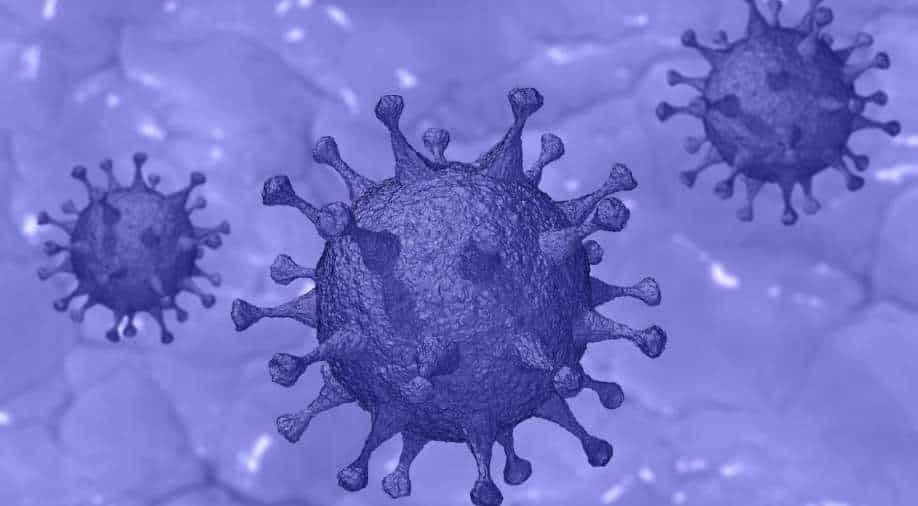
A couple of days ago, reports emerged that Chinese scientists from Wuhan have warned against a new lethal type of coronavirus NeoCov. Media reports citing Russian news agency Sputnik claimed that NeoCov requires only one mutation to infiltrate human cells.
The reports have has caused panic and stress among common people as it is said the infection and mortality rate is extremely high as ‘one in every three infected person dies’.
However, on Saturday (January 29) Indian doctors and experts weighed in on the rising fears of NeoCov and advised people not to panic.
ALSO READ | Explainer: What is new coronavirus NeoCov that kills 1 in 3 patients? Find out the truth
Dr Rahul Pandit, a member of National and Maharashtra’s Covid-19 Taskforce said as quoted by Indian news agency IANS: “Currently, there is no direct evidence that NeoCov affects the human body, and we should not panic or get stressed.”
“There are many viruses in the world that are yet to be discovered and whose characteristics are not known,” said Pandit, who is also Director-Critical Care, Fortis Hospitals Mumbai.
“We are going through a challenging time and should focus on managing the ongoing Covid-19 pandemic. I advise people not to panic, keep their guard up and follow Covid-19 appropriate protocols,” he added.
As per a report, the NeoCov was discovered in South Africa and it is claimed to be related to the respiratory syndrome MERS-COV.
Some reports have termed NeoCov as a new variant, some have called it new coronavirus, hence, further investigation and official statement from World Health Organisation (WHO) is awaited.
ALSO READ | US company T-Mobile to sack unvaccinated corporate staff on April 2, say reports
NeoCov is linked to the MERS-CoV virus and its outbreaks were previously discovered in the Middle Eastern countries in 2012 and 2015.
Scientists from the Wuhan University in China have said that NeoCoV was discovered in a bat population and appears to be similar to the SARS-CoV-2, which causes COVID-19 in humans.
An unpeered study published on the bioRxiv website mentioned that NeoCoV and its close relative PDF-2180-CoV can infect humans.
A part of the published report read: “Middle East Respiratory Syndrome coronavirus (MERS-CoV) and several bat coronaviruses employ Dipeptidyl peptidase-4 (DPP4) as their functional receptors. However, the receptor for NeoCoV, the closest MERS-CoV relative yet discovered in bats, remains enigmatic.”
Dr Dhiren Gupta from Sir Ganga Ram Hospital, New Delhi stated that the variant’s transmission to humans is still a “scientific speculation” and “hypothesis”.
“This NeoCov is very different from SARS-CoV virus (sarbecovirus) and belongs to merbecovirus which is a different genus.
“It cannot infect human ACE2 (scientists are speculating if it can combine with SARS and start affecting humans). This is a hypothesis raised by scientists (which is not unusual in science),” Gupta added.
“It’s just a hypothesis turning into sensationalist doomsday predictions,” Dr Gupta said.
Responding to the reports, Dr Shashank Joshi, Maharashtra task force member, told India-based newspaper The Times Of India: “NeoCov can use ACE2 receptors of bats, but it cannot use human ACE2 receptors unless a new mutation occurs. Everything else that is being said about this virus is hype.”
A couple of days ago, reports emerged that Chinese scientists from Wuhan have warned against a new lethal type of coronavirus NeoCov. Media reports citing Russian news agency Sputnik claimed that NeoCov requires only one mutation to infiltrate human cells. The reports have has caused panic and stress among common people as it is said the infection and mortality rate is extremely high as ‘one in every three infected person dies’. However, on Saturday (January 29) Indian doctors and experts weighed in on the rising fears of NeoCov and advised people not to panic. ALSO READ | Explainer: What is new coronavirus NeoCov that kills 1 in 3 patients? Find out the truth Dr Rahul Pandit, a member of National and Maharashtra’s Covid-19 Taskforce said as quoted by Indian news agency IANS: “Currently, there is no direct evidence that NeoCov affects the human body, and we should not panic or get stressed.” “There are many viruses in the world that are yet to be discovered and whose characteristics are not known,” said Pandit, who is also Director-Critical Care, Fortis Hospitals Mumbai. “We are going through a challenging time and should focus on managing the ongoing Covid-19 pandemic. I advise people not to panic, keep their guard up and follow Covid-19 appropriate protocols,” he added. As per a report, the NeoCov was discovered in South Africa and it is claimed to be related to the respiratory syndrome MERS-COV. Some reports have termed NeoCov as a new variant, some have called it new coronavirus, hence, further investigation and official statement from World Health Organisation (WHO) is awaited. ALSO READ | US company T-Mobile to sack unvaccinated corporate staff on April 2, say reports NeoCov is linked to the MERS-CoV virus and its outbreaks were previously discovered in the Middle Eastern countries in 2012 and 2015. Scientists from the Wuhan University in China have said that NeoCoV was discovered in a bat population and appears to be similar to the SARS-CoV-2, which causes COVID-19 in humans. An unpeered study published on the bioRxiv website mentioned that NeoCoV and its close relative PDF-2180-CoV can infect humans. A part of the published report read: “Middle East Respiratory Syndrome coronavirus (MERS-CoV) and several bat coronaviruses employ Dipeptidyl peptidase-4 (DPP4) as their functional receptors. However, the receptor for NeoCoV, the closest MERS-CoV relative yet discovered in bats, remains enigmatic.” Dr Dhiren Gupta from Sir Ganga Ram Hospital, New Delhi stated that the variant’s transmission to humans is still a “scientific speculation” and “hypothesis”. “This NeoCov is very different from SARS-CoV virus (sarbecovirus) and belongs to merbecovirus which is a different genus. “It cannot infect human ACE2 (scientists are speculating if it can combine with SARS and start affecting humans). This is a hypothesis raised by scientists (which is not unusual in science),” Gupta added. “It’s just a hypothesis turning into sensationalist doomsday predictions,” Dr Gupta said. Responding to the reports, Dr Shashank Joshi, Maharashtra task force member, told India-based newspaper The Times Of India: “NeoCov can use ACE2 receptors of bats, but it cannot use human ACE2 receptors unless a new mutation occurs. Everything else that is being said about this virus is hype.”