Sign up for our daily briefing
Make your busy days simpler with the Axios AM and PM newsletters. Catch up on what’s new and why it matters in just 5 minutes.
Catch up on the day’s biggest business stories
Subscribe to the Axios Closer newsletter for insights into the day’s business news and trends and why they matter.
Sign up for Axios Pro Rata
Dive into the world of dealmakers across VC, PE and M&A with Axios Pro Rata. Delivered daily to your inbox by Dan Primack and Kia Kokalitcheva.
Sports news worthy of your time
Binge on the stats and stories that drive the sports world with the Axios Sports newsletter. Sign up for free.
Tech news worthy of your time
Get our smart take on technology from the Valley and D.C. with Axios Login. Sign up for free.
Get the inside stories
Get an insider’s guide to the new White House with Axios Sneak Peek. Sign up for free.
Catch up on coronavirus stories and special reports, curated by Mike Allen everyday
Catch up on coronavirus stories and special reports, curated by Mike Allen everyday
Want a daily digest of the top Denver news?
Get a daily digest of the most important stories affecting your hometown with Axios Denver
Want a daily digest of the top Des Moines news?
Get a daily digest of the most important stories affecting your hometown with the Axios Des Moines newsletter.
Want a daily digest of the top Twin Cities news?
Get a daily digest of the most important stories affecting your hometown with Axios Twin Cities
Want a daily digest of the top Tampa Bay news?
Get a daily digest of the most important stories affecting your hometown with the Axios Tampa Bay newsletter.
Want a daily digest of the top Charlotte news?
Get a daily digest of the most important stories affecting your hometown with Axios Charlotte
Want a daily digest of the top Nashville news?
Get a daily digest of the most important stories affecting your hometown with the Axios Nashville newsletter.
Want a daily digest of the top Columbus news?
Get a daily digest of the most important stories affecting your hometown with the Axios Columbus newsletter.
Want a daily digest of the top Dallas news?
Get a daily digest of the most important stories affecting your hometown with the Axios Dallas newsletter.
Want a daily digest of the top Austin news?
Get a daily digest of the most important stories affecting your hometown with the Axios Austin newsletter.
Want a daily digest of the top Atlanta news?
Get a daily digest of the most important stories affecting your hometown with the Axios Atlanta newsletter.
Want a daily digest of the top Philadelphia news?
Get a daily digest of the most important stories affecting your hometown with the Axios Philadelphia newsletter.
Want a daily digest of the top Chicago news?
Get a daily digest of the most important stories affecting your hometown with the Axios Chicago newsletter.
Sign up for Axios NW Arkansas
Stay up-to-date on the most important and interesting stories affecting NW Arkansas, authored by local reporters
Want a daily digest of the top DC news?
Get a daily digest of the most important stories affecting your hometown with the Axios DC newsletter.
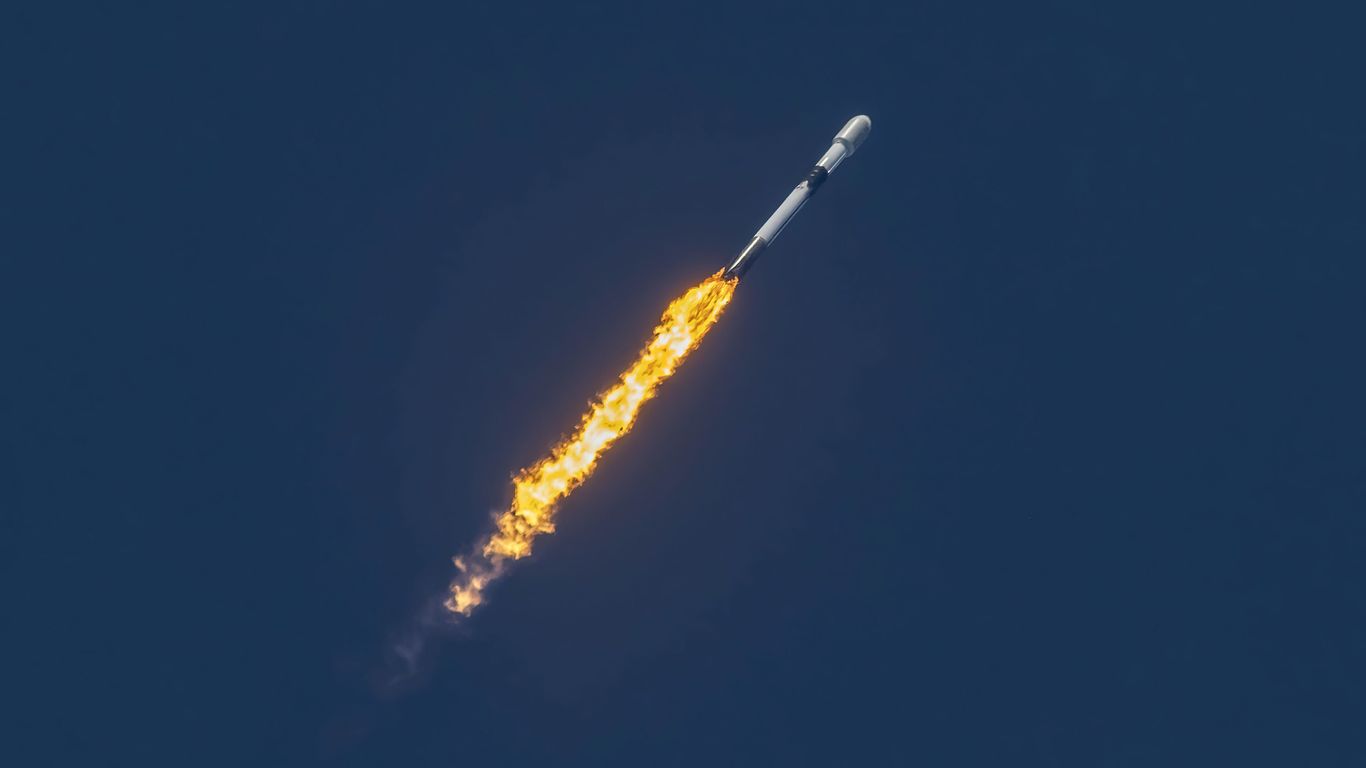
The Falcon 9 rocket carrying the Starlink satellites. Photo: SpaceX
SpaceX’s most recent batch of Starlink satellites has been severely impacted by a solar storm that struck Earth’s magnetic field on Friday.
Why it matters: Starlink — SpaceX’s satellite internet venture — is expected to be a major source of revenue for the company, with hundreds of satellites already launched and functioning in orbit.
What’s happening: The solar storm made atmospheric drag at least 50% higher than during other missions, according to SpaceX, effectively pulling the satellites back down to Earth not long after launch.
- At least 40 of the satellites launched Thursday from Florida are expected to re-enter the atmosphere or have already re-entered.
- “The de-orbiting satellites pose zero collision risk with other satellites and by design demise upon atmospheric reentry — meaning no orbital debris is created and no satellite parts hit the ground,” SpaceX said in a statement.
How it works: SpaceX sends Starlink satellites to a low orbit and monitors the spacecraft for failure after launch.
- That low altitude allows the company to de-orbit the satellites relatively quickly if a problem were to occur after launch.
The big picture: SpaceX isn’t the only company working to build a fleet of internet-beaming satellites around Earth.
- Amazon and others also have plans to launch satellites in the coming years, stoking fears that these small spacecraft could create more orbital debris if they fail and pollute the night sky with light that astronomers will have to contend with.
Sign up for our daily briefingMake your busy days simpler with the Axios AM and PM newsletters. Catch up on what’s new and why it matters in just 5 minutes.Catch up on the day’s biggest business storiesSubscribe to the Axios Closer newsletter for insights into the day’s business news and trends and why they matter.Sign up for Axios Pro RataDive into the world of dealmakers across VC, PE and M&A with Axios Pro Rata. Delivered daily to your inbox by Dan Primack and Kia Kokalitcheva.Sports news worthy of your timeBinge on the stats and stories that drive the sports world with the Axios Sports newsletter. Sign up for free.Tech news worthy of your timeGet our smart take on technology from the Valley and D.C. with Axios Login. Sign up for free.Get the inside storiesGet an insider’s guide to the new White House with Axios Sneak Peek. Sign up for free.Catch up on coronavirus stories and special reports, curated by Mike Allen everydayCatch up on coronavirus stories and special reports, curated by Mike Allen everydayWant a daily digest of the top Denver news?Get a daily digest of the most important stories affecting your hometown with Axios DenverWant a daily digest of the top Des Moines news?Get a daily digest of the most important stories affecting your hometown with the Axios Des Moines newsletter.Want a daily digest of the top Twin Cities news?Get a daily digest of the most important stories affecting your hometown with Axios Twin CitiesWant a daily digest of the top Tampa Bay news?Get a daily digest of the most important stories affecting your hometown with the Axios Tampa Bay newsletter.Want a daily digest of the top Charlotte news?Get a daily digest of the most important stories affecting your hometown with Axios CharlotteWant a daily digest of the top Nashville news?Get a daily digest of the most important stories affecting your hometown with the Axios Nashville newsletter.Want a daily digest of the top Columbus news?Get a daily digest of the most important stories affecting your hometown with the Axios Columbus newsletter.Want a daily digest of the top Dallas news?Get a daily digest of the most important stories affecting your hometown with the Axios Dallas newsletter.Want a daily digest of the top Austin news?Get a daily digest of the most important stories affecting your hometown with the Axios Austin newsletter.Want a daily digest of the top Atlanta news?Get a daily digest of the most important stories affecting your hometown with the Axios Atlanta newsletter.Want a daily digest of the top Philadelphia news?Get a daily digest of the most important stories affecting your hometown with the Axios Philadelphia newsletter.Want a daily digest of the top Chicago news?Get a daily digest of the most important stories affecting your hometown with the Axios Chicago newsletter.Sign up for Axios NW ArkansasStay up-to-date on the most important and interesting stories affecting NW Arkansas, authored by local reportersWant a daily digest of the top DC news?Get a daily digest of the most important stories affecting your hometown with the Axios DC newsletter.The Falcon 9 rocket carrying the Starlink satellites. Photo: SpaceXSpaceX’s most recent batch of Starlink satellites has been severely impacted by a solar storm that struck Earth’s magnetic field on Friday.Why it matters: Starlink — SpaceX’s satellite internet venture — is expected to be a major source of revenue for the company, with hundreds of satellites already launched and functioning in orbit.What’s happening: The solar storm made atmospheric drag at least 50% higher than during other missions, according to SpaceX, effectively pulling the satellites back down to Earth not long after launch.At least 40 of the satellites launched Thursday from Florida are expected to re-enter the atmosphere or have already re-entered. “The de-orbiting satellites pose zero collision risk with other satellites and by design demise upon atmospheric reentry — meaning no orbital debris is created and no satellite parts hit the ground,” SpaceX said in a statement.How it works: SpaceX sends Starlink satellites to a low orbit and monitors the spacecraft for failure after launch. That low altitude allows the company to de-orbit the satellites relatively quickly if a problem were to occur after launch.The big picture: SpaceX isn’t the only company working to build a fleet of internet-beaming satellites around Earth. Amazon and others also have plans to launch satellites in the coming years, stoking fears that these small spacecraft could create more orbital debris if they fail and pollute the night sky with light that astronomers will have to contend with.