

Protestors and local residents gather at the George Floyd Memorial in Minneapolis, the site of the murder of George Floyd, on April 20, 2021. File Photo by Jemal Countess/UPI | License Photo
Feb. 22 (UPI) — Closing arguments in the trial of three former Minneapolis police officers accused of violating the civil rights of George Floyd began Tuesday with prosecutors and defenders each making final pitches to the jury.
Prosecutors told the panel of 12 jurors at a federal courtroom in St. Paul, Minn., that the former officers — Tou Thao, Thomas Lane and J. Alexander Kueng — mocked and refused to help Floyd as he lay dying while being held down by a colleague for nearly 10 minutes on May 25, 2020, the Minneapolis Star Tribune and KARE-TV reported.
The three, they said, thus violated Floyd’s civil rights as he was being killed by fellow former Officer Derek Chauvin, ignoring their training as they failed to intervene.
Chauvin was found guilty in state court last April on murder and manslaughter charges and was sentenced to 22 and a half years in prison.
“They chose not to aid George Floyd as the window into which Mr. Floyd’s life could have been saved slammed shut,” U.S. Attorney Manda Sertich argued. “This is a crime. The defendants are guilty as charged.”
She reminded jurors the trio had the ability and duty to render aid to Floyd as he repeatedly complained he couldn’t breathe as Chauvin had him pinned down with a knee on his neck — but chose not to.
Sertich also stated prosecutors don’t need to prove that Kueng, Lane and Thao acted with intent to hurt or injure Floyd, but only that they acted with “deliberate indifference” to his safety.
Defense attorneys for the three officers then followed with their own closing arguments as the month-long trial neared completion.
Robert Paule, attorney for Thao, argued that his actions did not amount to a “willful” intention to commit a crime after prosecutors drew attention to Thao’s mocking Floyd during the incident and remarking to bystanders that this is “why you don’t do drugs.”
Paule spent some of his closing arguments going over the concept of “excited delirium” by which officers cannot assume a handcuffed suspect to be under control.
Attorney Earl Gray said his client, Lane, was a rookie cop who took his cues from his training officer, Chauvin.
“It’s common sense,” he said. “If you’re a rookie four days on the job and you have a veteran next to you during a crisis? You look to him. That’s common sense.”
Prosecutors, however, said that while Lane expressed concern over Floyd’s well-being during the incident, he made no further attempt to save him after being initially rebuffed by Chauvin.
In arguing the innocence of Kueng, attorney Thomas Plunkett also cited his subordination to Chauvin, a lack of training and experience and the confidence he placed in his senior officers.
He also attempted to refute the testimony of several key witnesses against Kueng.
One such witness was Katie Blackwell, formerly the MPD inspector in charge of training, whom Plunkett said was close with Chauvin and whose training program is now under investigation by federal authorities.
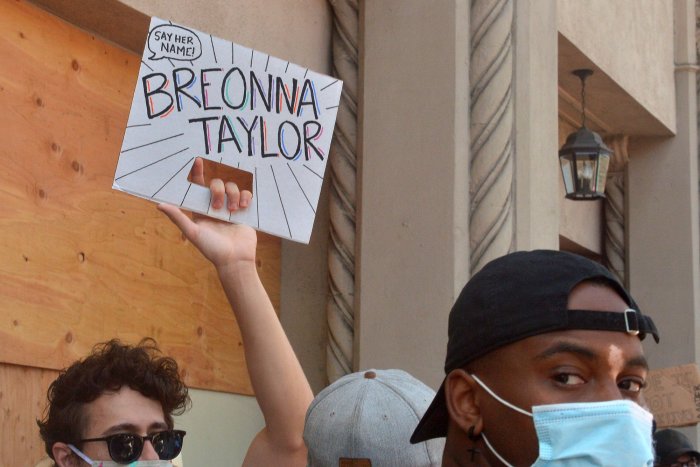
Demonstrators hold a sign in Los Angeles on June 14 for Breonna Taylor, a black woman who was shot by police in her home while she was sleeping. Photo by Jim Ruymen/UPI | License Photo
Protestors and local residents gather at the George Floyd Memorial in Minneapolis, the site of the murder of George Floyd, on April 20, 2021. File Photo by Jemal Countess/UPI | License Photo Feb. 22 (UPI) — Closing arguments in the trial of three former Minneapolis police officers accused of violating the civil rights of George Floyd began Tuesday with prosecutors and defenders each making final pitches to the jury. Prosecutors told the panel of 12 jurors at a federal courtroom in St. Paul, Minn., that the former officers — Tou Thao, Thomas Lane and J. Alexander Kueng — mocked and refused to help Floyd as he lay dying while being held down by a colleague for nearly 10 minutes on May 25, 2020, the Minneapolis Star Tribune and KARE-TV reported. The three, they said, thus violated Floyd’s civil rights as he was being killed by fellow former Officer Derek Chauvin, ignoring their training as they failed to intervene. Chauvin was found guilty in state court last April on murder and manslaughter charges and was sentenced to 22 and a half years in prison. “They chose not to aid George Floyd as the window into which Mr. Floyd’s life could have been saved slammed shut,” U.S. Attorney Manda Sertich argued. “This is a crime. The defendants are guilty as charged.” She reminded jurors the trio had the ability and duty to render aid to Floyd as he repeatedly complained he couldn’t breathe as Chauvin had him pinned down with a knee on his neck — but chose not to. Sertich also stated prosecutors don’t need to prove that Kueng, Lane and Thao acted with intent to hurt or injure Floyd, but only that they acted with “deliberate indifference” to his safety. Defense attorneys for the three officers then followed with their own closing arguments as the month-long trial neared completion. Robert Paule, attorney for Thao, argued that his actions did not amount to a “willful” intention to commit a crime after prosecutors drew attention to Thao’s mocking Floyd during the incident and remarking to bystanders that this is “why you don’t do drugs.” Paule spent some of his closing arguments going over the concept of “excited delirium” by which officers cannot assume a handcuffed suspect to be under control. Attorney Earl Gray said his client, Lane, was a rookie cop who took his cues from his training officer, Chauvin. “It’s common sense,” he said. “If you’re a rookie four days on the job and you have a veteran next to you during a crisis? You look to him. That’s common sense.” Prosecutors, however, said that while Lane expressed concern over Floyd’s well-being during the incident, he made no further attempt to save him after being initially rebuffed by Chauvin. In arguing the innocence of Kueng, attorney Thomas Plunkett also cited his subordination to Chauvin, a lack of training and experience and the confidence he placed in his senior officers. He also attempted to refute the testimony of several key witnesses against Kueng. One such witness was Katie Blackwell, formerly the MPD inspector in charge of training, whom Plunkett said was close with Chauvin and whose training program is now under investigation by federal authorities. Demonstrators hold a sign in Los Angeles on June 14 for Breonna Taylor, a black woman who was shot by police in her home while she was sleeping. Photo by Jim Ruymen/UPI | License Photo