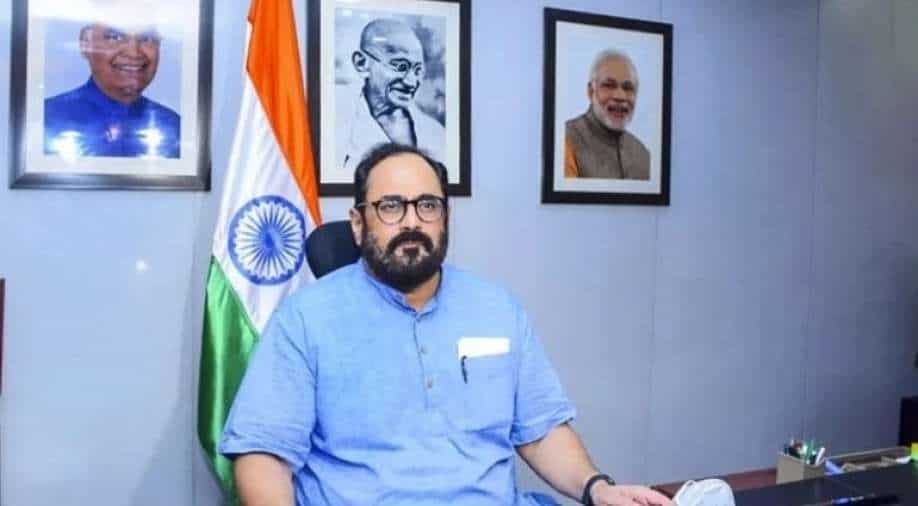
The Central government is going to introduce a new data governance framework as per Union minister of state for electronics and IT, Rajeev Chandrasekhar.
According to Chandrasekhar, “As we are increasing the digitisation of government, we need to create a harmonised setup for the whole government for data management.”
“This will allow government and government departments to better design and better target efficacy of public spending programmes, be it in infrastructure or in service delivery.”
“There needs to be an overall approach as to how laws are made; this framework lays out the architecture and defines institutionally the procedure for data collection storage access and anonymisation (with respect to the information contained within the government ecosystem),” he added.
The Modi administration has prepared a draft that mentions the guidelines on how government institutions analyse data within a larger government ecosystem.
Chandrasekhar said, “The feedback on the previous policy called the ‘India Data Accessibility and Use’ was that the name itself (was) being misunderstood, it almost seemed like it was a data sharing policy, which it was not. We have now rejigged the policy framework.”
“It seems like a broader policy for data governance as has been outlined in sections 1 and 2 [of the new policy], but the sections forward are similar to the policy draft shared in February. But it is not clear how the two policies will interrelate,” said Internet Freedom Foundation (IFF) trustee Apar Gupta.
Also read | Russia-Ukraine crisis: Indian minister accuses big tech platforms of weaponsing internet
As per the policy, ”India Data Management Office (IDMO) will be responsible for developing rules, standards, and guidelines under the National Data Governance Framework that will be published periodically.”
“IDMO shall formulate all data/datasets/metadata rules, standards, and guidelines in consultation with ministries, state governments, and industry. IDMO will conduct at least two semi-annual consultations and report carding for this purpose with representation from state governments and industry,” it added.
“What you’re seeing today are the building blocks of the overall architecture for the next 10 years of India’s tech economy,” Chandrasekhar said.
“The IDMO will be accountable to make sure that the standards of anonymisation are set and that they do not permit any de-anonymisation,” he added.
(With inputs from agencies)
The Central government is going to introduce a new data governance framework as per Union minister of state for electronics and IT, Rajeev Chandrasekhar. According to Chandrasekhar, “As we are increasing the digitisation of government, we need to create a harmonised setup for the whole government for data management.” “This will allow government and government departments to better design and better target efficacy of public spending programmes, be it in infrastructure or in service delivery.” “There needs to be an overall approach as to how laws are made; this framework lays out the architecture and defines institutionally the procedure for data collection storage access and anonymisation (with respect to the information contained within the government ecosystem),” he added. The Modi administration has prepared a draft that mentions the guidelines on how government institutions analyse data within a larger government ecosystem. Chandrasekhar said, “The feedback on the previous policy called the ‘India Data Accessibility and Use’ was that the name itself (was) being misunderstood, it almost seemed like it was a data sharing policy, which it was not. We have now rejigged the policy framework.” “It seems like a broader policy for data governance as has been outlined in sections 1 and 2 [of the new policy], but the sections forward are similar to the policy draft shared in February. But it is not clear how the two policies will interrelate,” said Internet Freedom Foundation (IFF) trustee Apar Gupta. Also read | Russia-Ukraine crisis: Indian minister accuses big tech platforms of weaponsing internet As per the policy, ”India Data Management Office (IDMO) will be responsible for developing rules, standards, and guidelines under the National Data Governance Framework that will be published periodically.” “IDMO shall formulate all data/datasets/metadata rules, standards, and guidelines in consultation with ministries, state governments, and industry. IDMO will conduct at least two semi-annual consultations and report carding for this purpose with representation from state governments and industry,” it added. “What you’re seeing today are the building blocks of the overall architecture for the next 10 years of India’s tech economy,” Chandrasekhar said. “The IDMO will be accountable to make sure that the standards of anonymisation are set and that they do not permit any de-anonymisation,” he added. (With inputs from agencies)