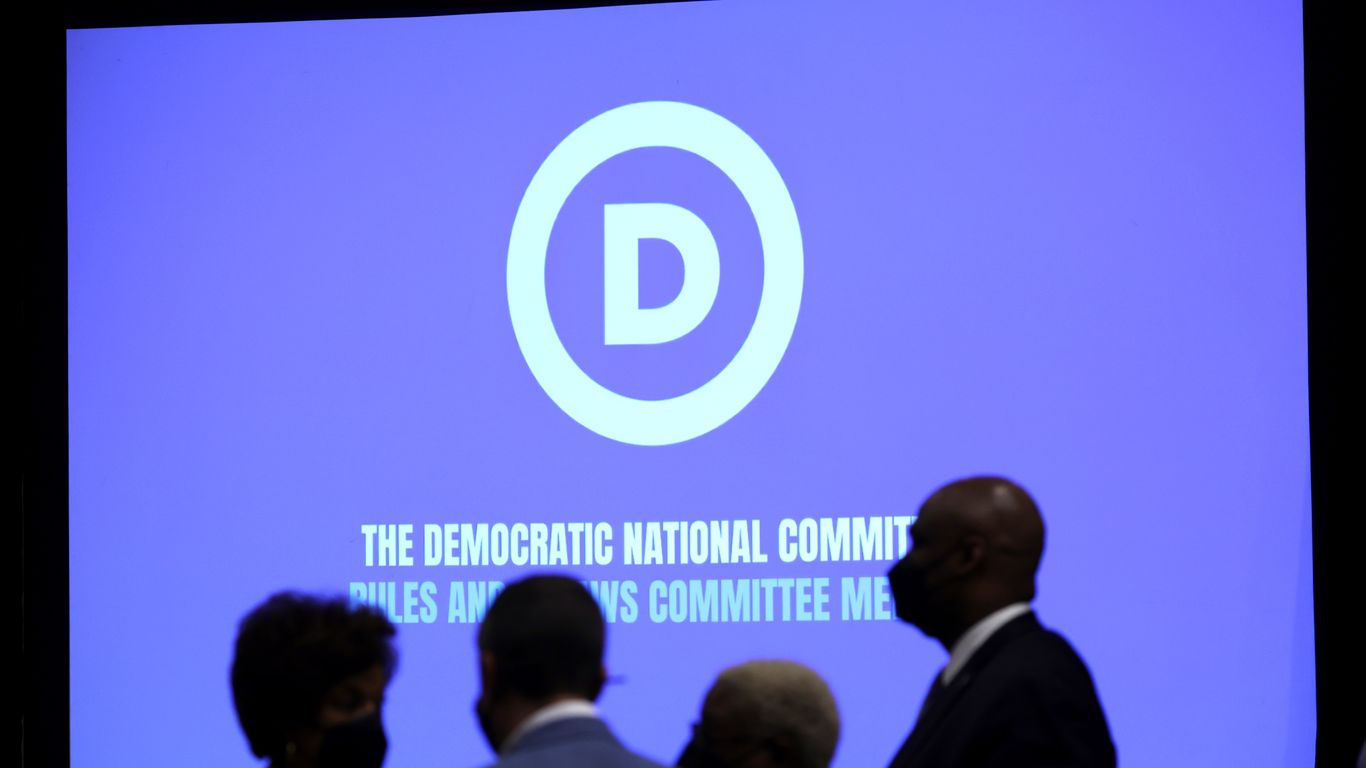
The 2024 Democratic presidential primaries may look monumentally different from previous cycles after a Democratic National Committee panel voted Wednesday to give new states the chance to hold early primaries.
Why it matters: These early contests are often decisive in picking parties’ nominees, giving some candidates breakout momentum going into Super Tuesday while hobbling others who underperform expectations.
- As a result of that importance, states like Iowa and New Hampshire often fight bitterly to maintain their coveted first-in-the-nation status.
Driving the news: The DNC’s Rules and Bylaws Committee voted to allow states to apply to hold an early primary and set the dates for them to do so.
- States will have to send a letter of intent by early May expressing interest applying for early state status, followed by a formal application in early June.
- State delegations will then give presentations to the committee later in June. The panel will propose its primary calendar in July and the full DNC will vote on it the following month.
The backdrop: Democrats have increasingly grappled with the disconnect in giving overwhelmingly white, rural states outsized power in picking the nominee for their racially diverse, and increasingly urban, party.
- DNC Chair Jaime Harrison, who hails from South Carolina, an early voting state in which the majority of Democrats are Black, has advocated for a process that reflects the party’s diversity.
- The final nail in the coffin may have been the chaotic 2020 Iowa Caucus, which suffered significantly delays due to major problems in vote reporting.
What they’re saying: After the vote, James Roosevelt, the co-chair of the Rules and Bylaws Committee, praised the resolution as “powerful.”
- “I personally believe, and I think I’m not speaking just for myself, that this is a powerful resolution of a thoughtful process that is going to be inclusive of all Democrats. That’s our goal,” he said.
- Sen. Maggie Hassan (D-N.H.) stated her resolve that her state remain the first, tweeting, “We’ve defended our primary before and we will do it again.”
- Several committee members expressed a dislike of caucuses – the system Iowa and Nevada use, though that could change – and suggested they would be looked on unfavorably in the application process compared to primaries.
What’s next: The vote kicks off what could be a frenzied process for states to seize more primacy in selecting the presidential nominee.
- Several states including Michigan, Nevada and New Jersey have already begun to make plays to move up in the calendar.
The 2024 Democratic presidential primaries may look monumentally different from previous cycles after a Democratic National Committee panel voted Wednesday to give new states the chance to hold early primaries.Why it matters: These early contests are often decisive in picking parties’ nominees, giving some candidates breakout momentum going into Super Tuesday while hobbling others who underperform expectations.As a result of that importance, states like Iowa and New Hampshire often fight bitterly to maintain their coveted first-in-the-nation status.Driving the news: The DNC’s Rules and Bylaws Committee voted to allow states to apply to hold an early primary and set the dates for them to do so.States will have to send a letter of intent by early May expressing interest applying for early state status, followed by a formal application in early June.State delegations will then give presentations to the committee later in June. The panel will propose its primary calendar in July and the full DNC will vote on it the following month.The backdrop: Democrats have increasingly grappled with the disconnect in giving overwhelmingly white, rural states outsized power in picking the nominee for their racially diverse, and increasingly urban, party.DNC Chair Jaime Harrison, who hails from South Carolina, an early voting state in which the majority of Democrats are Black, has advocated for a process that reflects the party’s diversity.The final nail in the coffin may have been the chaotic 2020 Iowa Caucus, which suffered significantly delays due to major problems in vote reporting.What they’re saying: After the vote, James Roosevelt, the co-chair of the Rules and Bylaws Committee, praised the resolution as “powerful.””I personally believe, and I think I’m not speaking just for myself, that this is a powerful resolution of a thoughtful process that is going to be inclusive of all Democrats. That’s our goal,” he said.Sen. Maggie Hassan (D-N.H.) stated her resolve that her state remain the first, tweeting, “We’ve defended our primary before and we will do it again.”Several committee members expressed a dislike of caucuses – the system Iowa and Nevada use, though that could change – and suggested they would be looked on unfavorably in the application process compared to primaries.What’s next: The vote kicks off what could be a frenzied process for states to seize more primacy in selecting the presidential nominee.Several states including Michigan, Nevada and New Jersey have already begun to make plays to move up in the calendar.