

Health
Two drugmakers have been mired for years in the pre-application phase of getting FDA approval for over-the-counter use.
By Kate Kelly, New York Times Service
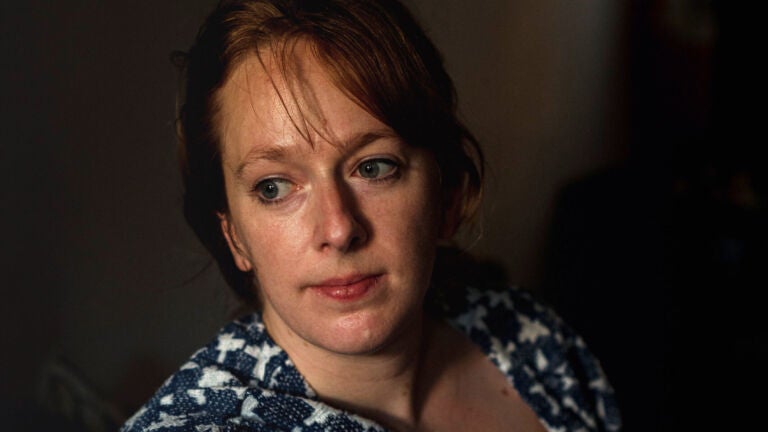
A few years ago, after learning she had high blood pressure, Shannon Connell-Robichaud asked her doctor to switch her birth control pill prescription. She had read that the pill she had been prescribed put people around her age with that condition at high risk of a stroke.
The doctor agreed, she said — but only after Connell-Robichaud, a 32-year-old paralegal, shared a list of the blood-pressure measurements she had been keeping on her own. After that, she recalled, the doctor said, “Hey, maybe you’re right.”
The question of whether women can monitor their own health risks in taking birth control pills is at the heart of a debate now playing out in the pharmaceutical industry and at the Food and Drug Administration: Should oral contraceptives be made available over the counter rather than requiring a prescription?
Although they are taken by millions of people, birth control pills can interact with certain medical conditions in ways that have always placed them in the prescription category, meaning a doctor’s oversight is required.
If the FDA approves an over-the-counter version, it will be effectively saying that women with underlying health risks who choose that option will have to do their own research on how the birth control pill would interact with their condition and any other medications they are taking.
Reproductive-rights activists in the United States view an over-the-counter birth control pill as an easy and effective tool for rural, poor and historically marginalized communities to avoid unwanted pregnancies — reducing their barriers to health care and lowering the abortion rate along the way.
At least two drug companies want to apply to the FDA to make the switch to an over-the-counter version, and have been in communication with the agency about their plans. But after years of preliminary trials to clear the agency’s research and consumer-testing hurdles, neither has reached the stage of applying yet.
The FDA defenders say that by asking many questions and demanding rigorous testing, the agency is being prudent about assessing the potential health risks of making the pill available without a prescription.
But frustrated supporters of the switch are critical of the agency’s prolonged pre-application process — which at certain points requires FDA permission to advance to the next stage. Some of them see the process as an obstacle to the advancement of reproductive rights, as well as a case study of the cost when the FDA takes an overly cautious approach. (The agency has also been criticized in other drug-approval cases of moving too quickly, as when it fast-tracked approval of a controversial Alzheimer’s drug earlier this year.)
Proponents of allowing over-the-counter access say they view the issue with greater urgency now that the Supreme Court is reconsidering the constitutional right to abortion as established by Roe v. Wade in 1973.
The movement to enhance access to birth control pills “is something that gives a bit of hope in these days where it feels we are constantly under attack,” Monica Simpson, executive director of the reproductive rights organization SisterSong, said in a webinar in late September.
Oral contraceptives are already the most popular nonpermanent method of birth control in the United States and are sold over the counter in scores of countries, including the United Arab Emirates, China and Mexico.
In the United States, close to $3 billion in prescription birth control pills are sold each year, according to the life-sciences research firm Iqvia. They are manufactured by a variety of drug companies, including Pfizer and Bayer AG.
The push to approve an over-the-counter option is coming primarily from two smaller players: Cadence Health, which is planning to apply on behalf of its oral contraceptive, Zena; and HRA Pharma, a small drugmaker based in Paris.
Research shows that birth control pills are safer than pregnancy itself, which carries a higher risk of blood clots, among other health concerns.
“We want to make it safe. We are not trying to cut corners at all,” said Dr. Nap Hosang, the obstetrician and gynecologist who is co-CEO of Cadence Health.
But the process has been moving slowly, and the FDA, which has been in discussions since at least 2016 with both Cadence and HRA Pharma, has yet to be convinced.
HRA Pharma completed its final testing phase, known as the “actual-use trial,” this year. It is expected to file a formal application for over-the-counter approval next year.
But the FDA put the brakes on Cadence’s actual-use trial about a year ago. It has asked the company to consider adding new warnings and additional details to existing warnings on its drug-safety label, and to repeat some tests for over-the-counter use.
Cadence officials say they are frustrated by the holdup. But one factor that may be working against Cadence is that Zena is a so-called combined pill, meaning it contains both estrogen and a progestin, whereas HRA Pharma’s pill contains only progesterone.
Combined pills such as Cadence’s account for 90% or more of oral contraceptive sales overall because they are less likely to cause unscheduled bleeding and require less vigilance on the part of patients to take them at the same time every day. But they also carry greater safety risks for some women, including those with high blood pressure or clotting issues, than their progestin-only counterparts, such as HRA Pharma’s pill.
“The sense that I have gotten, and it sounds like you have heard the same, is that FDA has more questions about putting a combined pill over the counter,” said Dr. Susan Wood, a health-policy professor at George Washington University. She resigned as director of women’s health at the FDA in 2005 over what she considered unreasonable delays in approving over-the-counter use of the drug Plan B, which prevents pregnancy after unprotected sex.
“I don’t think they’re being political, I think they’re just being cautious,” she said. “They have to consider safety in an OTC setting,” which is different from safety in a prescription-only setting, she added.
Still, Wood and other past participants in the FDA switch process say that spending five years or more in a dialogue over testing and drug-safety materials before a switch to over-the-counter availability has even been applied for — as Cadence and HRA Pharma have — is a strikingly long time.
The FDA declined to address specific questions about Cadence and HRA Pharma but said it aims to make a decision within 10 months once any company submits an application for approval of a move from prescription to over-the-counter status. “The amount of time that a company spends in its development program prior to submitting an application for a prescription-to-nonprescription switch is determined by the company, not by the FDA,” an agency spokesperson said in a statement.
The two companies see it differently. They say they have sought the FDA’s blessing — and have at points been obligated to have it in order to proceed — throughout their preparations. “We are required to get their clearance to move to the next step in development. And we don’t have their clearance,” said Cadence co-CEO Samantha Miller.
The FDA’s over-the-counter switch option appeals to some pharmaceutical companies because the first drug in its class to be switched can be granted three years of exclusivity in its market, giving it a temporary monopoly on over-the-counter sales. That advantage is one reason that the larger Dublin, Ireland-based pharmaceutical company Perrigo announced plans earlier this year to acquire HRA Pharma.
To varying degrees, both HRA Pharma and Cadence are involved with outside efforts to persuade the FDA to go along with their plans. Although HRA Pharma has been publicly quiet about its interactions with the agency, it has worked closely with a research and advocacy group that is pushing the agency to approve an over-the-counter option. And Cadence is counting on women’s health providers and public-health officials to try to get the agency to look more favorably on its planned application.
Last year, Cadence hired Dallas-based consultant Rania Batrice, a deputy campaign manager to U.S. Sen. Bernie Sanders, I-Vt., during his 2016 presidential campaign, to advise it on a political strategy.
Batrice has been urging lawmakers such as Rep. Barbara Lee, D-Calif., who chairs the Congressional Pro-Choice Caucus, to ask the FDA to participate in a panel of medical experts to evaluate the idea of a switch to over-the-counter status for Zena.
“Access to over-the-counter birth control is a racial equity issue, a gender equity issue and an economic equity issue,” Lee said in a statement. “In the same way that other methods of birth control are available over the counter, the pill should be too.”
Batrice has also been working with grassroots organizations such as the Indigenous rights group NDN Collective and the New American Leaders Action Fund to help carry the message that over-the-counter access to a drug such as Zena would benefit rural residents, people of color and others with barriers to health care.
Cadence executives say approval for Zena is probably two years away at least — if they are successful at all with the FDA.
“We’ve had so many issues discussed and agreed with this FDA over the past five years,” said Miller. “At this point, there are now really some challenging issues that could prevent a successful OTC switch.”
Among them is opposition from anti-abortion groups such as the Family Research Council and the American Association of Pro-Life Obstetricians and Gynecologists, which say that women’s reproductive health decisions should be made in consultation with a doctor. And some women say they are not sure the drugs should be freely available without a doctor or a pharmacist’s input.
“I know so many people that don’t read the box, that don’t pay attention,” said Jordan de Jongh, a 28-year-old data-entry worker in Houston who takes oral contraceptives. “So I could see a teen girl getting access to birth control at a pharmacy without having to tell her super-religious parents; that’s awesome. But I could see a girl taking five pills and thinking she won’t get pregnant from having sex last night; that’s a myth.”
Newsletter Signup
Stay up to date on all the latest news from Boston.com
Health Two drugmakers have been mired for years in the pre-application phase of getting FDA approval for over-the-counter use. Shannon Connell-Robichaud asked her doctor to change her birth-control pill prescription after she learned that it would increase her risk of a stroke.Credit…Hannah Yoon for The New York Times Hannah Yoon / The New York Times By Kate Kelly, New York Times Service December 14, 2021 | 11:13 AM A few years ago, after learning she had high blood pressure, Shannon Connell-Robichaud asked her doctor to switch her birth control pill prescription. She had read that the pill she had been prescribed put people around her age with that condition at high risk of a stroke. The doctor agreed, she said — but only after Connell-Robichaud, a 32-year-old paralegal, shared a list of the blood-pressure measurements she had been keeping on her own. After that, she recalled, the doctor said, “Hey, maybe you’re right.” The question of whether women can monitor their own health risks in taking birth control pills is at the heart of a debate now playing out in the pharmaceutical industry and at the Food and Drug Administration: Should oral contraceptives be made available over the counter rather than requiring a prescription? Although they are taken by millions of people, birth control pills can interact with certain medical conditions in ways that have always placed them in the prescription category, meaning a doctor’s oversight is required. If the FDA approves an over-the-counter version, it will be effectively saying that women with underlying health risks who choose that option will have to do their own research on how the birth control pill would interact with their condition and any other medications they are taking. Reproductive-rights activists in the United States view an over-the-counter birth control pill as an easy and effective tool for rural, poor and historically marginalized communities to avoid unwanted pregnancies — reducing their barriers to health care and lowering the abortion rate along the way. At least two drug companies want to apply to the FDA to make the switch to an over-the-counter version, and have been in communication with the agency about their plans. But after years of preliminary trials to clear the agency’s research and consumer-testing hurdles, neither has reached the stage of applying yet. The FDA defenders say that by asking many questions and demanding rigorous testing, the agency is being prudent about assessing the potential health risks of making the pill available without a prescription. But frustrated supporters of the switch are critical of the agency’s prolonged pre-application process — which at certain points requires FDA permission to advance to the next stage. Some of them see the process as an obstacle to the advancement of reproductive rights, as well as a case study of the cost when the FDA takes an overly cautious approach. (The agency has also been criticized in other drug-approval cases of moving too quickly, as when it fast-tracked approval of a controversial Alzheimer’s drug earlier this year.) Proponents of allowing over-the-counter access say they view the issue with greater urgency now that the Supreme Court is reconsidering the constitutional right to abortion as established by Roe v. Wade in 1973. The movement to enhance access to birth control pills “is something that gives a bit of hope in these days where it feels we are constantly under attack,” Monica Simpson, executive director of the reproductive rights organization SisterSong, said in a webinar in late September. Oral contraceptives are already the most popular nonpermanent method of birth control in the United States and are sold over the counter in scores of countries, including the United Arab Emirates, China and Mexico. In the United States, close to $3 billion in prescription birth control pills are sold each year, according to the life-sciences research firm Iqvia. They are manufactured by a variety of drug companies, including Pfizer and Bayer AG. The push to approve an over-the-counter option is coming primarily from two smaller players: Cadence Health, which is planning to apply on behalf of its oral contraceptive, Zena; and HRA Pharma, a small drugmaker based in Paris. Research shows that birth control pills are safer than pregnancy itself, which carries a higher risk of blood clots, among other health concerns. “We want to make it safe. We are not trying to cut corners at all,” said Dr. Nap Hosang, the obstetrician and gynecologist who is co-CEO of Cadence Health. But the process has been moving slowly, and the FDA, which has been in discussions since at least 2016 with both Cadence and HRA Pharma, has yet to be convinced. HRA Pharma completed its final testing phase, known as the “actual-use trial,” this year. It is expected to file a formal application for over-the-counter approval next year. But the FDA put the brakes on Cadence’s actual-use trial about a year ago. It has asked the company to consider adding new warnings and additional details to existing warnings on its drug-safety label, and to repeat some tests for over-the-counter use. Cadence officials say they are frustrated by the holdup. But one factor that may be working against Cadence is that Zena is a so-called combined pill, meaning it contains both estrogen and a progestin, whereas HRA Pharma’s pill contains only progesterone. Combined pills such as Cadence’s account for 90% or more of oral contraceptive sales overall because they are less likely to cause unscheduled bleeding and require less vigilance on the part of patients to take them at the same time every day. But they also carry greater safety risks for some women, including those with high blood pressure or clotting issues, than their progestin-only counterparts, such as HRA Pharma’s pill. “The sense that I have gotten, and it sounds like you have heard the same, is that FDA has more questions about putting a combined pill over the counter,” said Dr. Susan Wood, a health-policy professor at George Washington University. She resigned as director of women’s health at the FDA in 2005 over what she considered unreasonable delays in approving over-the-counter use of the drug Plan B, which prevents pregnancy after unprotected sex. “I don’t think they’re being political, I think they’re just being cautious,” she said. “They have to consider safety in an OTC setting,” which is different from safety in a prescription-only setting, she added. Still, Wood and other past participants in the FDA switch process say that spending five years or more in a dialogue over testing and drug-safety materials before a switch to over-the-counter availability has even been applied for — as Cadence and HRA Pharma have — is a strikingly long time. The FDA declined to address specific questions about Cadence and HRA Pharma but said it aims to make a decision within 10 months once any company submits an application for approval of a move from prescription to over-the-counter status. “The amount of time that a company spends in its development program prior to submitting an application for a prescription-to-nonprescription switch is determined by the company, not by the FDA,” an agency spokesperson said in a statement. The two companies see it differently. They say they have sought the FDA’s blessing — and have at points been obligated to have it in order to proceed — throughout their preparations. “We are required to get their clearance to move to the next step in development. And we don’t have their clearance,” said Cadence co-CEO Samantha Miller. The FDA’s over-the-counter switch option appeals to some pharmaceutical companies because the first drug in its class to be switched can be granted three years of exclusivity in its market, giving it a temporary monopoly on over-the-counter sales. That advantage is one reason that the larger Dublin, Ireland-based pharmaceutical company Perrigo announced plans earlier this year to acquire HRA Pharma. To varying degrees, both HRA Pharma and Cadence are involved with outside efforts to persuade the FDA to go along with their plans. Although HRA Pharma has been publicly quiet about its interactions with the agency, it has worked closely with a research and advocacy group that is pushing the agency to approve an over-the-counter option. And Cadence is counting on women’s health providers and public-health officials to try to get the agency to look more favorably on its planned application. Last year, Cadence hired Dallas-based consultant Rania Batrice, a deputy campaign manager to U.S. Sen. Bernie Sanders, I-Vt., during his 2016 presidential campaign, to advise it on a political strategy. Batrice has been urging lawmakers such as Rep. Barbara Lee, D-Calif., who chairs the Congressional Pro-Choice Caucus, to ask the FDA to participate in a panel of medical experts to evaluate the idea of a switch to over-the-counter status for Zena. “Access to over-the-counter birth control is a racial equity issue, a gender equity issue and an economic equity issue,” Lee said in a statement. “In the same way that other methods of birth control are available over the counter, the pill should be too.” Batrice has also been working with grassroots organizations such as the Indigenous rights group NDN Collective and the New American Leaders Action Fund to help carry the message that over-the-counter access to a drug such as Zena would benefit rural residents, people of color and others with barriers to health care. Cadence executives say approval for Zena is probably two years away at least — if they are successful at all with the FDA. “We’ve had so many issues discussed and agreed with this FDA over the past five years,” said Miller. “At this point, there are now really some challenging issues that could prevent a successful OTC switch.” Among them is opposition from anti-abortion groups such as the Family Research Council and the American Association of Pro-Life Obstetricians and Gynecologists, which say that women’s reproductive health decisions should be made in consultation with a doctor. And some women say they are not sure the drugs should be freely available without a doctor or a pharmacist’s input. “I know so many people that don’t read the box, that don’t pay attention,” said Jordan de Jongh, a 28-year-old data-entry worker in Houston who takes oral contraceptives. “So I could see a teen girl getting access to birth control at a pharmacy without having to tell her super-religious parents; that’s awesome. But I could see a girl taking five pills and thinking she won’t get pregnant from having sex last night; that’s a myth.” Newsletter Signup Stay up to date on all the latest news from Boston.com