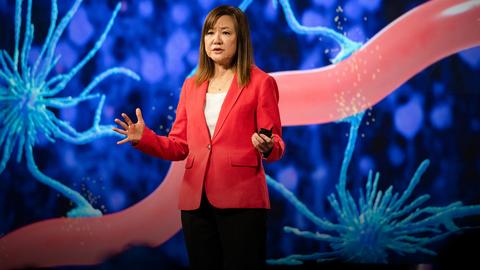
What if we could use brain waves to treat Alzheimer’s? Professor and neuroscientist Li-Huei Tsai details a promising new approach to artificially stimulate gamma brain waves using light and sound therapy, to increase connectivity and synchrony and delay the onset of this deadly disease. This non-invasive therapy has already been shown to work in mice — now it’s on to human clinical trials, with the potential to usher in a brighter future for everyone. (Followed by a Q&A with head of TED Chris Anderson)
Become a TED Member
Want to hear more great ideas like this one? Sign up for TED Membership to get exclusive access to captivating conversations, engaging events, and more!
This talk was presented at an official TED conference. TED’s editors chose to feature it for you.
Learn of research volunteer opportunities at MIT.
Reach out to Cognito Therapeutics about participating in a trial.
Learn more about MIT’s Aging Brain Initiative and consider lending your support.
What if we could use brain waves to treat Alzheimer’s? Professor and neuroscientist Li-Huei Tsai details a promising new approach to artificially stimulate gamma brain waves using light and sound therapy, to increase connectivity and synchrony and delay the onset of this deadly disease. This non-invasive therapy has already been shown to work in mice — now it’s on to human clinical trials, with the potential to usher in a brighter future for everyone. (Followed by a Q&A with head of TED Chris Anderson)
This talk was presented at an official TED conference. TED’s editors chose to feature it for you.
Learn of research volunteer opportunities at MIT.
Reach out to Cognito Therapeutics about participating in a trial.
Learn more about MIT’s Aging Brain Initiative and consider lending your support.
Li-Huei Tsai investigates disorders of memory and cognition at the cellular and molecular level, especially neurodegenerative conditions like Alzheimer’s disease.
What if we could use brain waves to treat Alzheimer’s? Professor and neuroscientist Li-Huei Tsai details a promising new approach to artificially stimulate gamma brain waves using light and sound therapy, to increase connectivity and synchrony and delay the onset of this deadly disease. This non-invasive therapy has already been shown to work in mice — now it’s on to human clinical trials, with the potential to usher in a brighter future for everyone. (Followed by a Q&A with head of TED Chris Anderson)Become a TED MemberWant to hear more great ideas like this one? Sign up for TED Membership to get exclusive access to captivating conversations, engaging events, and more!This talk was presented at an official TED conference. TED’s editors chose to feature it for you.Learn of research volunteer opportunities at MIT.Reach out to Cognito Therapeutics about participating in a trial.Learn more about MIT’s Aging Brain Initiative and consider lending your support.What if we could use brain waves to treat Alzheimer’s? Professor and neuroscientist Li-Huei Tsai details a promising new approach to artificially stimulate gamma brain waves using light and sound therapy, to increase connectivity and synchrony and delay the onset of this deadly disease. This non-invasive therapy has already been shown to work in mice — now it’s on to human clinical trials, with the potential to usher in a brighter future for everyone. (Followed by a Q&A with head of TED Chris Anderson)This talk was presented at an official TED conference. TED’s editors chose to feature it for you.Learn of research volunteer opportunities at MIT.Reach out to Cognito Therapeutics about participating in a trial.Learn more about MIT’s Aging Brain Initiative and consider lending your support.Li-Huei Tsai investigates disorders of memory and cognition at the cellular and molecular level, especially neurodegenerative conditions like Alzheimer’s disease.