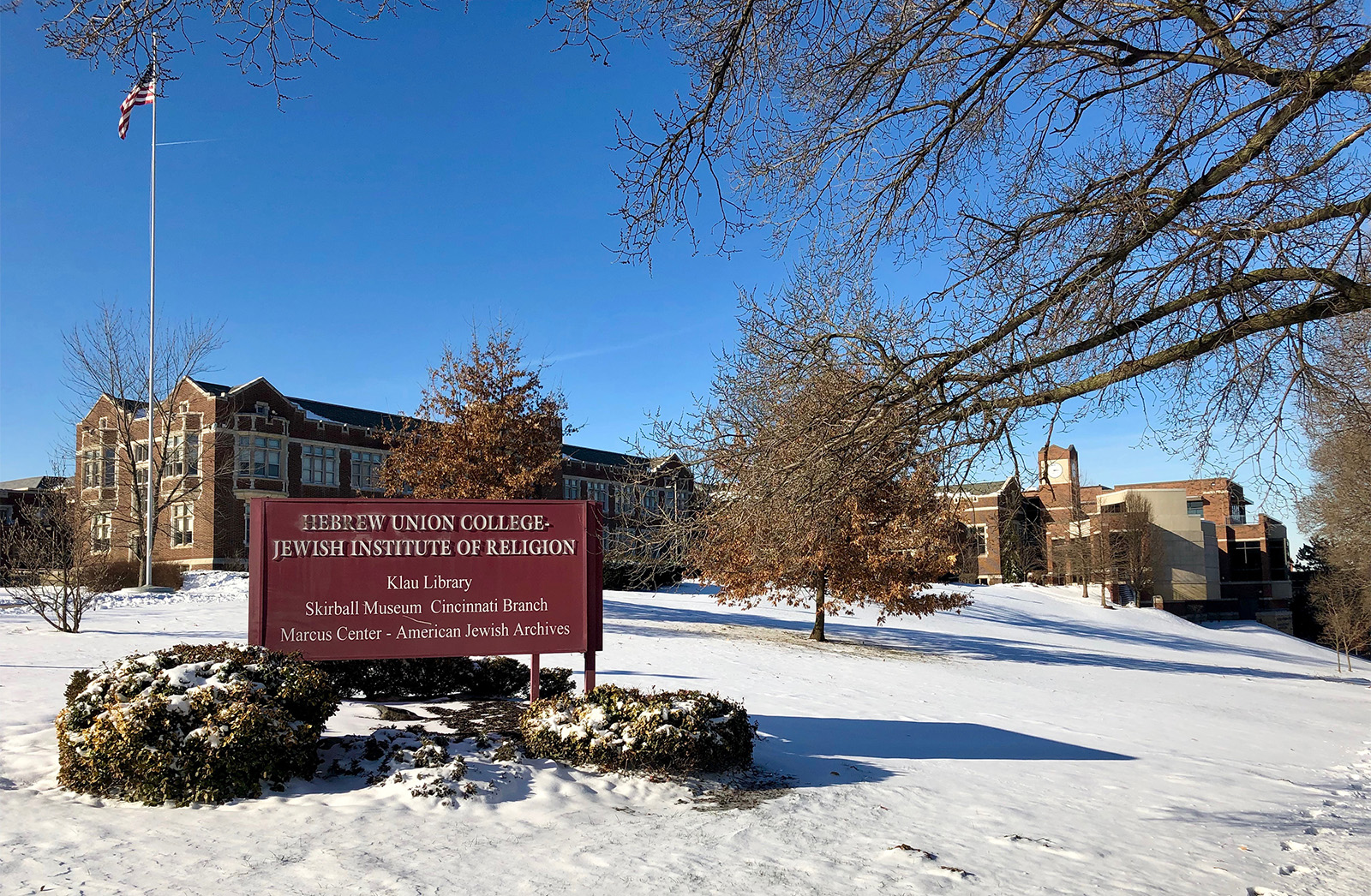
(RNS) — The nation’s oldest Jewish seminary will end rabbinic training at its flagship campus in Cincinnati by 2026, the governing board of the Reform movement’s Hebrew Union College Jewish Institute of Religion voted on Monday (April 11).
The college was founded in 1875 by Isaac Mayer Wise who also founded the Reform movement in the United States. Over the past two years, its Ohio campus had seen declining enrollment as students opted for its coastal campuses, in New York and Los Angeles.
The vote to close the Cincinnati campus was bitterly resisted by faculty, students and alumni. A letter from nearly 300 alumni of Hebrew Union College urged the governing board to reject the restructuring recommendations.
In the end, the restructuring plan was approved by more than a two-thirds majority.
This year the Cincinnati campus had only 27 rabbinical students, a steady decline from 51 students in the 2008-09 school year. The campus has seven buildings; two are no longer in use by the college. But the five that remain include some treasured institutions, such as the Klau Library, American Jewish Archives and Skirball Museum. The campus will remain a research center and continue offering some graduate-level courses.
By contrast, the Hebrew Union College’s L.A. campus has 40 students; The New York 45 students.
“We recognize the pain that this decision causes and expect to take the appropriate time and care to implement this decision in a sensitive and constructive manner, in collaboration with our community,” President Andrew Rehfeld said in a statement.
The recommendation to shutter the rabbinic degree program in Cincinnati was spurred by both declining enrollment and financial strain. The college is facing a record $8.8 million deficit.
“Given declining enrollment and future demographic projections, it is no longer practical or prudent to continue delivering rabbinic education as we do now, with three full residential programs,” the recommendation to the Hebrew Union College board read.
RELATED: As Jewish movements struggle, independent rabbinical schools gain a toehold
(RNS) — The nation’s oldest Jewish seminary will end rabbinic training at its flagship campus in Cincinnati by 2026, the governing board of the Reform movement’s Hebrew Union College Jewish Institute of Religion voted on Monday (April 11). The college was founded in 1875 by Isaac Mayer Wise who also founded the Reform movement in the United States. Over the past two years, its Ohio campus had seen declining enrollment as students opted for its coastal campuses, in New York and Los Angeles. The vote to close the Cincinnati campus was bitterly resisted by faculty, students and alumni. A letter from nearly 300 alumni of Hebrew Union College urged the governing board to reject the restructuring recommendations. In the end, the restructuring plan was approved by more than a two-thirds majority. This year the Cincinnati campus had only 27 rabbinical students, a steady decline from 51 students in the 2008-09 school year. The campus has seven buildings; two are no longer in use by the college. But the five that remain include some treasured institutions, such as the Klau Library, American Jewish Archives and Skirball Museum. The campus will remain a research center and continue offering some graduate-level courses. By contrast, the Hebrew Union College’s L.A. campus has 40 students; The New York 45 students. “We recognize the pain that this decision causes and expect to take the appropriate time and care to implement this decision in a sensitive and constructive manner, in collaboration with our community,” President Andrew Rehfeld said in a statement. The recommendation to shutter the rabbinic degree program in Cincinnati was spurred by both declining enrollment and financial strain. The college is facing a record $8.8 million deficit. “Given declining enrollment and future demographic projections, it is no longer practical or prudent to continue delivering rabbinic education as we do now, with three full residential programs,” the recommendation to the Hebrew Union College board read. RELATED: As Jewish movements struggle, independent rabbinical schools gain a toehold