
National
Palin is expected to appeal.
By Jeremy W. Peters, New York Times Service
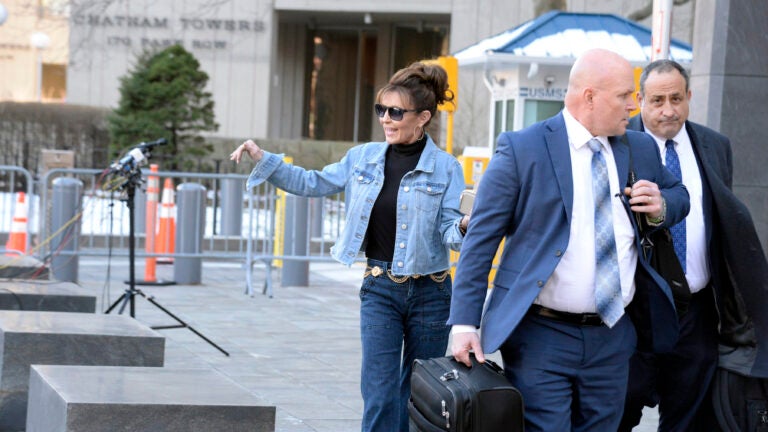
NEW YORK — A jury returned a verdict against Sarah Palin in her libel suit against The New York Times on Tuesday, finding that there was insufficient evidence to prove the newspaper had defamed her in a 2017 editorial that erroneously linked her political rhetoric to a mass shooting.
The decision was the second time this week that Palin’s case was dealt a significant setback. On Monday, the presiding judge in federal court in lower Manhattan, Jed S. Rakoff, said that he would dismiss the case if the jury found in her favor.
Palin is expected to appeal.
The case is a major test of First Amendment law and the extremely high legal bar that the Supreme Court has set for proving a defamation claim against journalists. Lawyers for Palin, the former governor of Alaska and 2008 Republican vice-presidential nominee, have argued that the long-standing legal protections in place to shield journalists from liability for making inadvertent errors are outdated and overly broad. A public figure like Palin has to prove that a news organization acted with “actual malice” in publishing false information, meaning it displayed a reckless disregard for the truth or knew the information was false.
Palin’s suit alleged that The New York Times defamed her with an editorial that incorrectly asserted a link between her political rhetoric and a mass shooting near Tucson, Arizona, in 2011 that left six people dead and 14 wounded, including Gabrielle Giffords, then a Democratic member of Congress. Giffords’ district had been one of 20 singled out on a map circulated by Palin’s political action committee underneath digitized crosshairs. There was no evidence the shooter had seen or was motivated by the map.
The editorial was published June 14, 2017, the same day that a gunman opened fire at a baseball field in Virginia where Republican congressmen were practicing, injuring several people, including Rep. Steve Scalise of Louisiana. The headline was “America’s Lethal Politics,” and the editorial asked whether the Virginia shooting was evidence of how vicious American politics had become. The Times corrected the editorial the morning after it was published after readers pointed out the mistake.
On the witness stand, the former Times editor who inserted the erroneous wording into the article, James Bennet, testified that the incident left him wracked with guilt and that he had thought about it almost every day since. “It was just a terrible mistake,” he said.
Palin and her lawyers attempted to convince the jury that Bennet had acted out of animus toward her and, regardless of any contrition he later showed, was reckless in rushing to judgment about her.
Rakoff rejected those claims in his ruling Monday, saying that Palin had not produced evidence to support the idea that Bennet disregarded the truth either willfully or through his own recklessness. The ruling came in response to a routine procedural motion by Times lawyers to rule in its favor, which defendants have a right to do after the plaintiff has presented all of its evidence to the jury.
This article originally appeared in The New York Times.
Boston.com Today
Get news delivered to your inbox each morning.
National Palin is expected to appeal. Former Gov. Sarah Palin of Alaska departs the federal courthouse in lower Manhattan on Tuesday, Feb. 15, 2022. Jurors returned a verdict against Palin in her libel suit against The New York Times on Tuesday, finding that there was insufficient evidence to prove the newspaper had defamed her in a 2017 editorial. (Jefferson Siegel/The New York Times) By Jeremy W. Peters, New York Times Service February 15, 2022 NEW YORK — A jury returned a verdict against Sarah Palin in her libel suit against The New York Times on Tuesday, finding that there was insufficient evidence to prove the newspaper had defamed her in a 2017 editorial that erroneously linked her political rhetoric to a mass shooting. The decision was the second time this week that Palin’s case was dealt a significant setback. On Monday, the presiding judge in federal court in lower Manhattan, Jed S. Rakoff, said that he would dismiss the case if the jury found in her favor. Palin is expected to appeal. The case is a major test of First Amendment law and the extremely high legal bar that the Supreme Court has set for proving a defamation claim against journalists. Lawyers for Palin, the former governor of Alaska and 2008 Republican vice-presidential nominee, have argued that the long-standing legal protections in place to shield journalists from liability for making inadvertent errors are outdated and overly broad. A public figure like Palin has to prove that a news organization acted with “actual malice” in publishing false information, meaning it displayed a reckless disregard for the truth or knew the information was false. Palin’s suit alleged that The New York Times defamed her with an editorial that incorrectly asserted a link between her political rhetoric and a mass shooting near Tucson, Arizona, in 2011 that left six people dead and 14 wounded, including Gabrielle Giffords, then a Democratic member of Congress. Giffords’ district had been one of 20 singled out on a map circulated by Palin’s political action committee underneath digitized crosshairs. There was no evidence the shooter had seen or was motivated by the map. The editorial was published June 14, 2017, the same day that a gunman opened fire at a baseball field in Virginia where Republican congressmen were practicing, injuring several people, including Rep. Steve Scalise of Louisiana. The headline was “America’s Lethal Politics,” and the editorial asked whether the Virginia shooting was evidence of how vicious American politics had become. The Times corrected the editorial the morning after it was published after readers pointed out the mistake. On the witness stand, the former Times editor who inserted the erroneous wording into the article, James Bennet, testified that the incident left him wracked with guilt and that he had thought about it almost every day since. “It was just a terrible mistake,” he said. Palin and her lawyers attempted to convince the jury that Bennet had acted out of animus toward her and, regardless of any contrition he later showed, was reckless in rushing to judgment about her. Rakoff rejected those claims in his ruling Monday, saying that Palin had not produced evidence to support the idea that Bennet disregarded the truth either willfully or through his own recklessness. The ruling came in response to a routine procedural motion by Times lawyers to rule in its favor, which defendants have a right to do after the plaintiff has presented all of its evidence to the jury. This article originally appeared in The New York Times. Boston.com Today Get news delivered to your inbox each morning.