
Kashmir Valley has been hit by an intense cold wave with temperatures dipping to sub-zero as people in the Valley have been using every method and appliance to keep themselves warm. But the age-old Kangri (earthen pot) still is the favourite to keep themselves warm.
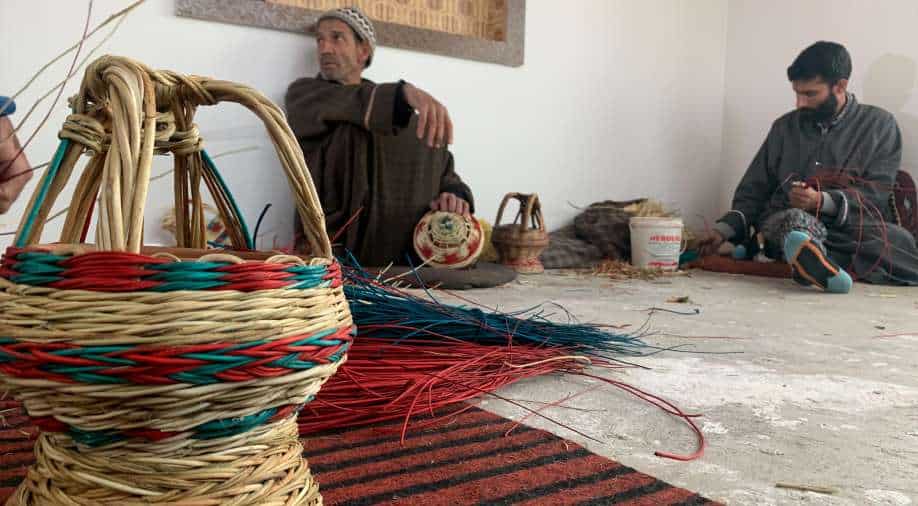
Kangri is an earthen pot encased in a wicker basket. The weaving around it is intricate and beautifully designed. The locals in the Valley call it a portable heater to keep warm under freezing condictions.
The Chraar-e-Shareef area in central Kashmir’s Budgam district is known for making the best Kangri’s in the Kashmir Valley. For its craftsmanship and quality, lakhs of Kangri’s are sold every winter from this area.

”Necessity is the mother of invention. We live in a region which is very cold with at least for 4-5 months of winter. And to counter the cold, Kangri was invented. It keeps us warm. It has new designs now as well,” said Ghulam Hassan Bhat, a Kangri businessman.
“We get raw material from the jungle for weaving. We dry the twigs and later colour it. There is an earthen pot inside. It’s a lot of work for the artisans. There are various types of Kangris. And their pricing also depends on the same. It’s a part of our culture and also a necessity,” Bhat added.
“Although there are new heating devices in the market, this can never go out of fashion. It’s a craft which will always stay here. The best craftsmanship of making the Kangri is in this area of Chraar-e-Shareef. There is no electricity in our areas, we have huge power cuts and that’s why Kangri is our best way to keep warm,” he said.
One artisan makes around 3-4 Kangris in a day. The artisans say that the demand for Kangri has gone up. The long power cuts make most of the new gadgets and appliances useless while countering cold. So Kangri is a tradition as well as a necessity for the Kashmir Valley.

“I have been making these Kangris for 21 years. Our Kangris are famous for weaving. We take a lot of time to gather the raw material and use the best quality. We also get orders to weave Kangris for decoration. In our area, we must be making around 3 lakh Kangris every year. Now even people who were not associated with this craft have started making these Kangris,” said Manzoor Ahmad Bhat, an artisan.
Kangri making is also an art in itself. Artisans use different colours while weaving to make it look beautiful. The weaving is done stepwise and that decides the pricing of the Kangri.
”I make around four Kangris a day. The best quality Kangri is made in our area. We have beautiful colourful Kangris. It has many types, we differentiate the Kangris on the basis of workmanship. The weaving is done in steps and there are many such steps which make them better. I have been making Kangris for ages, although the rate of raw material has gone up. Kashmiris cannot do without the Kangri,” Ghulam Nabi Bhat said.
The younger generation has also started to pick up this art. They say with growing unemployment, they have also learnt the art from their elders and will teach the next generation as well.

”I have been making it for the last fiver years due to unemployment I started making Kangris. I looked for a job and didn’t get any so finally started making them. The younger generation doesn’t want to be associated with it. We were taught by our elders and we will teach it to our future generations. ” said Nasir Hussain Bhat, an artisan.
Kangri works on burning coal and it does have side effects. Experts say that it can cause skin burns, pollution and sometimes also be responsible for fire incidents in many areas, so while using Kangri’s a lot of protection needs to be taken.
Kashmir Valley has been hit by an intense cold wave with temperatures dipping to sub-zero as people in the Valley have been using every method and appliance to keep themselves warm. But the age-old Kangri (earthen pot) still is the favourite to keep themselves warm. Kangri is an earthen pot encased in a wicker basket. The weaving around it is intricate and beautifully designed. The locals in the Valley call it a portable heater to keep warm under freezing condictions. The Chraar-e-Shareef area in central Kashmir’s Budgam district is known for making the best Kangri’s in the Kashmir Valley. For its craftsmanship and quality, lakhs of Kangri’s are sold every winter from this area. ”Necessity is the mother of invention. We live in a region which is very cold with at least for 4-5 months of winter. And to counter the cold, Kangri was invented. It keeps us warm. It has new designs now as well,” said Ghulam Hassan Bhat, a Kangri businessman. “We get raw material from the jungle for weaving. We dry the twigs and later colour it. There is an earthen pot inside. It’s a lot of work for the artisans. There are various types of Kangris. And their pricing also depends on the same. It’s a part of our culture and also a necessity,” Bhat added. “Although there are new heating devices in the market, this can never go out of fashion. It’s a craft which will always stay here. The best craftsmanship of making the Kangri is in this area of Chraar-e-Shareef. There is no electricity in our areas, we have huge power cuts and that’s why Kangri is our best way to keep warm,” he said. One artisan makes around 3-4 Kangris in a day. The artisans say that the demand for Kangri has gone up. The long power cuts make most of the new gadgets and appliances useless while countering cold. So Kangri is a tradition as well as a necessity for the Kashmir Valley. “I have been making these Kangris for 21 years. Our Kangris are famous for weaving. We take a lot of time to gather the raw material and use the best quality. We also get orders to weave Kangris for decoration. In our area, we must be making around 3 lakh Kangris every year. Now even people who were not associated with this craft have started making these Kangris,” said Manzoor Ahmad Bhat, an artisan. Kangri making is also an art in itself. Artisans use different colours while weaving to make it look beautiful. The weaving is done stepwise and that decides the pricing of the Kangri. ”I make around four Kangris a day. The best quality Kangri is made in our area. We have beautiful colourful Kangris. It has many types, we differentiate the Kangris on the basis of workmanship. The weaving is done in steps and there are many such steps which make them better. I have been making Kangris for ages, although the rate of raw material has gone up. Kashmiris cannot do without the Kangri,” Ghulam Nabi Bhat said. The younger generation has also started to pick up this art. They say with growing unemployment, they have also learnt the art from their elders and will teach the next generation as well. ”I have been making it for the last fiver years due to unemployment I started making Kangris. I looked for a job and didn’t get any so finally started making them. The younger generation doesn’t want to be associated with it. We were taught by our elders and we will teach it to our future generations. ” said Nasir Hussain Bhat, an artisan. Kangri works on burning coal and it does have side effects. Experts say that it can cause skin burns, pollution and sometimes also be responsible for fire incidents in many areas, so while using Kangri’s a lot of protection needs to be taken.