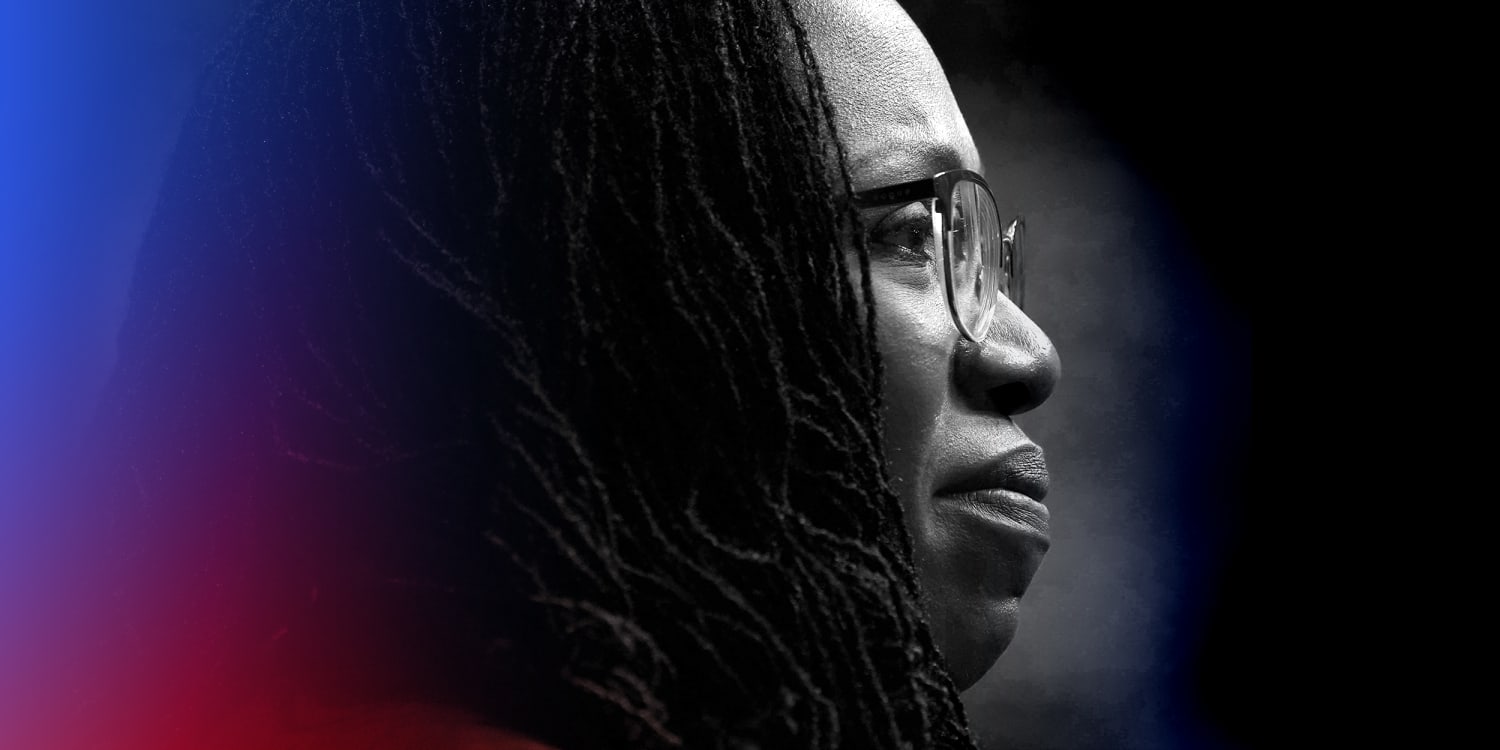
United States Supreme Court nominee Judge Ketanji Brown Jackson, if confirmed, will join a conservative court that appears committed to rolling back progress. While every justice changes the court in some way, this is a court that, before and after Jackson is confirmed, will retain a solid six-member conservative majority. Apparently eager to bulldoze over many of our established cases and legal protections, the conservative majority looks ready to rewrite the laws that order our society. The question is whether and how Jackson could change that.
While every justice changes the court in some way, this is a court that, before and after Jackson is confirmed, will retain a solid six-member conservative majority.
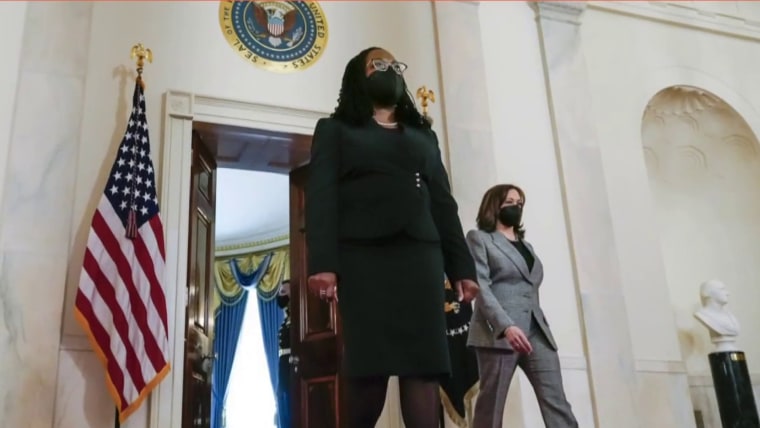
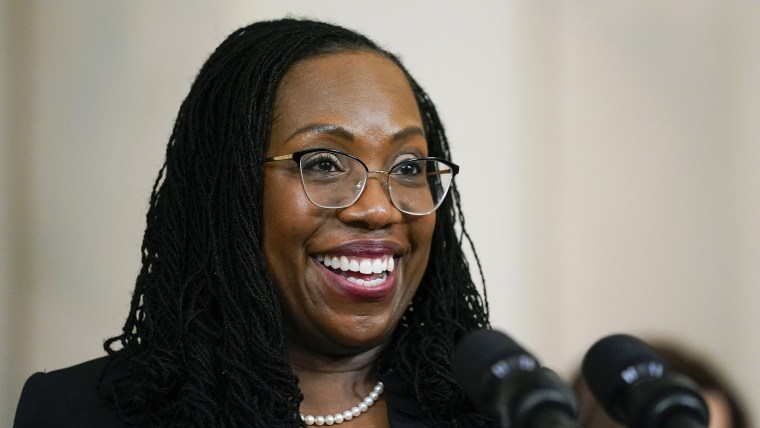
In some ways, Jackson is a historic and groundbreaking pick. She would be the first Black woman and the first former federal public defender to be a member of the Supreme Court. In other ways, she has a résumé that looks very much like other Supreme Court justices. She clerked for the justice she would be replacing, Justice Stephen Breyer. Chief Justice John Roberts and Justices Neil Gorsuch and Brett Kavanaugh also replaced their former bosses when they joined the court. In addition, she currently serves on the U.S. Court of Appeals for the District of Columbia Circuit, which is largely seen as a launching pad for Supreme Court justices. Roberts, and Justices Clarence Thomas, Gorsuch, and Kavanaugh also served on that court prior to their nominations.
Jackson gained notoriety for a number of her opinions during her time on the federal bench. In 2019, when she was a District Court judge, she famously wrote “presidents are not kings” when she ruled that former White House counsel Don McGahn had to testify before Congress as part of an impeachment inquiry into former President Donald Trump. More recently, on the Court of Appeals, Jackson was part of a panel that concluded that Trump could not block release of White House records related to the events of Jan. 6, 2021.
Let’s talk about what the legal landscape will look like when and if Jackson joins the court. Last week the court agreed to hear a challenge to Colorado’s anti-discrimination law, which prohibits businesses from refusing service based on a person’s sexual orientation. The woman challenging the law is a Christian website designer who does not want to create sites for same-sex weddings. The question the court will consider is whether Colorado’s law violates the website designer’s free speech rights. This case is likely to be just one in a series of matchups between an individual claiming a violation of First Amendment rights and state laws that bar various types of discrimination. Given the makeup of this court, its decision to take the case could spell bad news for those who support anti-discrimination laws, even in the face of First Amendment challenges.
The court also looks likely to prohibit affirmative action programs. For decades, the Supreme Court has concluded that colleges and universities can consider race as a factor to use in their admissions decisions because it recognized the importance of obtaining a diverse student body. But now the court has agreed to hear a case which challenges that previously settled idea. There appears little reason for the court to have agreed to hear cases challenging the consideration of race in admissions decisions by the University of North Carolina and Harvard unless it wanted to change this settled law.
One of the cases that could do the most harm to Americans deals with voting rights.
One of the cases that could do the most harm to Americans deals with voting rights. Without the right to vote, we have little ability to ensure that at least our elected branches are accountable and responsive to us. The court has agreed to hear a case that could further erode federal protections against state and local laws that burden the right to vote based on race.
That’s just a start. Before we celebrate our next Independence Day on July 4, this conservative majority of the Supreme Court will have reshaped our country. Abortion rights? Those almost certainly won’t be protected under the Constitution. If you want to obtain an abortion, your ability to do so will depend almost entirely on whether you live in a state in which abortion is legal. This conservative court will increasingly create two different Americas: one for people in blue states and another for people in red ones.
Unlike abortion rights, the rights of gun owners are sure to be expanded. Before Jackson joins the court, it will decide a case that asks whether New York can mandate that people who apply for a concealed carry license must show a good reason, such as a particular need for self-defense, for that license. The court was skeptical of New York’s law, and the only real question in that case is whether the court makes a narrow ruling focused just on the language of New York’s law, or if it tackles larger Second Amendment issues and makes it more difficult for states to impose other licensing requirements.
We’re also entering an era that will be marked by the expansion of religious rights — except for death row inmates. The court appears ready to deny requests by John Ramirez, a death row inmate who claims that he has a constitutionally protected right to have his Baptist pastor put his hands on him and audibly pray while he is put to death.
Certain others who assert religious rights claims are likely to fare better than Ramirez. One case the court will decide this term asks whether states can bar certain students who obtain financial aid from using those funds at religious schools. The court looks likely to side with those challenging the law, and conclude that states must allow students to use those government funds at religious schools. This may sound relatively minor, but it’s part of this court’s apparent dismantling of the separation between church and state, which was long seen as a bedrock principle in our society.
In another case dealing with religious rights, the court will rule on a challenge by a public high school football coach who was fired by a school board after he refused to stop kneeling and praying at the midfield line after football games. The court declined to hear an earlier version of this case three years ago, when the court was at least slightly more moderate, or perhaps more accurately, slightly less conservative. The coach was often joined by students and would give religious speeches after his prayers. The coach contends his firing violated his First Amendment rights to free speech and free exercise of religion. Those supporting the school board’s decision contend that students could otherwise feel either pressured to join the prayers or excluded based on their own religious beliefs. Look for the court to side with the football coach, and look for the court to accept more cases by religious objectors during Jackson’s likely tenure on the court.
Remember that Jackson, by all measures a judge who is ideologically left of center, will be replacing her former boss, Breyer, who is also left of center.
Another area Jackson would tackle on the bench, and one she has already weighed in on during her time as a federal judge, is the scope of executive authority. Before Jackson would join the court, her likely future colleagues will hear a case on the Biden administration’s ability to end former President Trump’s “remain in Mexico” policy. This policy requires that people who traveled through Mexico and arrived at our border seeking asylum must wait in Mexico while their applications are processed. The problem with asking people to wait in Mexico is that they may be subject to kidnapping, torture and assaut. Jackson would join a court operating in the wake of former President Trump’s attempts to sharply expand executive power.
Remember that Jackson, by all measures a judge who is ideologically left of center, will be replacing her former boss, Breyer, who is also left of center. In this way, the ideological balance of the court is unlikely to shift significantly with Jackon’s appointment. Indeed, our country’s highest court is so deeply conservative that it does not need our conservative chief justice, Roberts, to vote with them in a bevy of divisive, high-stakes cases that will come before the court this term and next.
Many in conservative political and legal circles have been waiting years for the moment when they can dispense with any need for incrementalism and go full steam ahead, rolling over abortion rights, voting rights, anti-discrimination laws, gun control measures and much more. The question is whether Jackson can do anything to stop this steady march toward the evisceration of so many of our closely held protections.
United States Supreme Court nominee Judge Ketanji Brown Jackson, if confirmed, will join a conservative court that appears committed to rolling back progress. While every justice changes the court in some way, this is a court that, before and after Jackson is confirmed, will retain a solid six-member conservative majority. Apparently eager to bulldoze over many of our established cases and legal protections, the conservative majority looks ready to rewrite the laws that order our society. The question is whether and how Jackson could change that.While every justice changes the court in some way, this is a court that, before and after Jackson is confirmed, will retain a solid six-member conservative majority.In some ways, Jackson is a historic and groundbreaking pick. She would be the first Black woman and the first former federal public defender to be a member of the Supreme Court. In other ways, she has a résumé that looks very much like other Supreme Court justices. She clerked for the justice she would be replacing, Justice Stephen Breyer. Chief Justice John Roberts and Justices Neil Gorsuch and Brett Kavanaugh also replaced their former bosses when they joined the court. In addition, she currently serves on the U.S. Court of Appeals for the District of Columbia Circuit, which is largely seen as a launching pad for Supreme Court justices. Roberts, and Justices Clarence Thomas, Gorsuch, and Kavanaugh also served on that court prior to their nominations.Jackson gained notoriety for a number of her opinions during her time on the federal bench. In 2019, when she was a District Court judge, she famously wrote “presidents are not kings” when she ruled that former White House counsel Don McGahn had to testify before Congress as part of an impeachment inquiry into former President Donald Trump. More recently, on the Court of Appeals, Jackson was part of a panel that concluded that Trump could not block release of White House records related to the events of Jan. 6, 2021.Let’s talk about what the legal landscape will look like when and if Jackson joins the court. Last week the court agreed to hear a challenge to Colorado’s anti-discrimination law, which prohibits businesses from refusing service based on a person’s sexual orientation. The woman challenging the law is a Christian website designer who does not want to create sites for same-sex weddings. The question the court will consider is whether Colorado’s law violates the website designer’s free speech rights. This case is likely to be just one in a series of matchups between an individual claiming a violation of First Amendment rights and state laws that bar various types of discrimination. Given the makeup of this court, its decision to take the case could spell bad news for those who support anti-discrimination laws, even in the face of First Amendment challenges.The court also looks likely to prohibit affirmative action programs. For decades, the Supreme Court has concluded that colleges and universities can consider race as a factor to use in their admissions decisions because it recognized the importance of obtaining a diverse student body. But now the court has agreed to hear a case which challenges that previously settled idea. There appears little reason for the court to have agreed to hear cases challenging the consideration of race in admissions decisions by the University of North Carolina and Harvard unless it wanted to change this settled law.One of the cases that could do the most harm to Americans deals with voting rights.One of the cases that could do the most harm to Americans deals with voting rights. Without the right to vote, we have little ability to ensure that at least our elected branches are accountable and responsive to us. The court has agreed to hear a case that could further erode federal protections against state and local laws that burden the right to vote based on race.That’s just a start. Before we celebrate our next Independence Day on July 4, this conservative majority of the Supreme Court will have reshaped our country. Abortion rights? Those almost certainly won’t be protected under the Constitution. If you want to obtain an abortion, your ability to do so will depend almost entirely on whether you live in a state in which abortion is legal. This conservative court will increasingly create two different Americas: one for people in blue states and another for people in red ones.Unlike abortion rights, the rights of gun owners are sure to be expanded. Before Jackson joins the court, it will decide a case that asks whether New York can mandate that people who apply for a concealed carry license must show a good reason, such as a particular need for self-defense, for that license. The court was skeptical of New York’s law, and the only real question in that case is whether the court makes a narrow ruling focused just on the language of New York’s law, or if it tackles larger Second Amendment issues and makes it more difficult for states to impose other licensing requirements.We’re also entering an era that will be marked by the expansion of religious rights — except for death row inmates. The court appears ready to deny requests by John Ramirez, a death row inmate who claims that he has a constitutionally protected right to have his Baptist pastor put his hands on him and audibly pray while he is put to death.Certain others who assert religious rights claims are likely to fare better than Ramirez. One case the court will decide this term asks whether states can bar certain students who obtain financial aid from using those funds at religious schools. The court looks likely to side with those challenging the law, and conclude that states must allow students to use those government funds at religious schools. This may sound relatively minor, but it’s part of this court’s apparent dismantling of the separation between church and state, which was long seen as a bedrock principle in our society.In another case dealing with religious rights, the court will rule on a challenge by a public high school football coach who was fired by a school board after he refused to stop kneeling and praying at the midfield line after football games. The court declined to hear an earlier version of this case three years ago, when the court was at least slightly more moderate, or perhaps more accurately, slightly less conservative. The coach was often joined by students and would give religious speeches after his prayers. The coach contends his firing violated his First Amendment rights to free speech and free exercise of religion. Those supporting the school board’s decision contend that students could otherwise feel either pressured to join the prayers or excluded based on their own religious beliefs. Look for the court to side with the football coach, and look for the court to accept more cases by religious objectors during Jackson’s likely tenure on the court.Remember that Jackson, by all measures a judge who is ideologically left of center, will be replacing her former boss, Breyer, who is also left of center.Another area Jackson would tackle on the bench, and one she has already weighed in on during her time as a federal judge, is the scope of executive authority. Before Jackson would join the court, her likely future colleagues will hear a case on the Biden administration’s ability to end former President Trump’s “remain in Mexico” policy. This policy requires that people who traveled through Mexico and arrived at our border seeking asylum must wait in Mexico while their applications are processed. The problem with asking people to wait in Mexico is that they may be subject to kidnapping, torture and assaut. Jackson would join a court operating in the wake of former President Trump’s attempts to sharply expand executive power.Remember that Jackson, by all measures a judge who is ideologically left of center, will be replacing her former boss, Breyer, who is also left of center. In this way, the ideological balance of the court is unlikely to shift significantly with Jackon’s appointment. Indeed, our country’s highest court is so deeply conservative that it does not need our conservative chief justice, Roberts, to vote with them in a bevy of divisive, high-stakes cases that will come before the court this term and next.Many in conservative political and legal circles have been waiting years for the moment when they can dispense with any need for incrementalism and go full steam ahead, rolling over abortion rights, voting rights, anti-discrimination laws, gun control measures and much more. The question is whether Jackson can do anything to stop this steady march toward the evisceration of so many of our closely held protections.