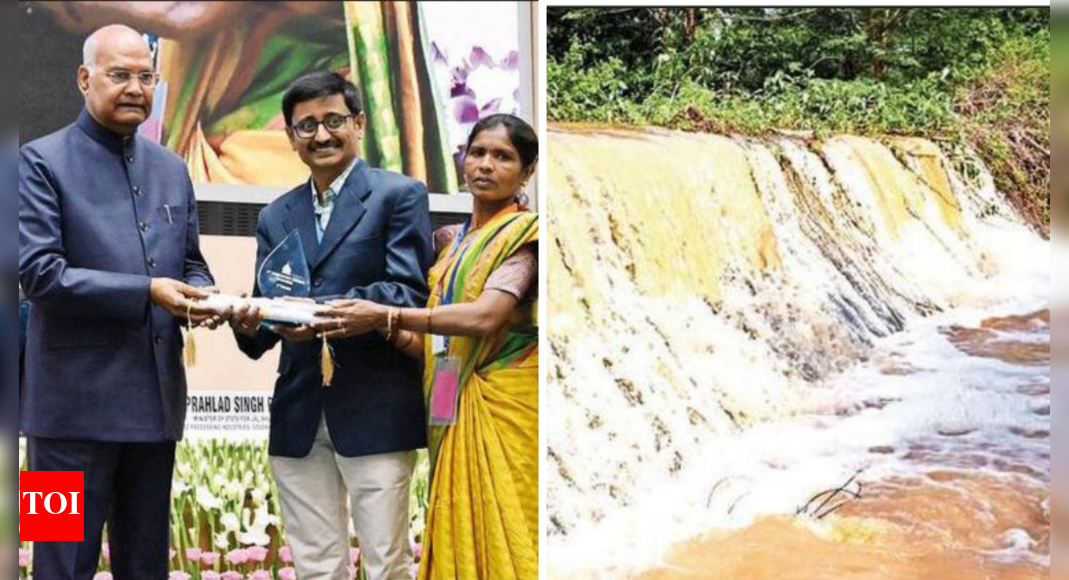
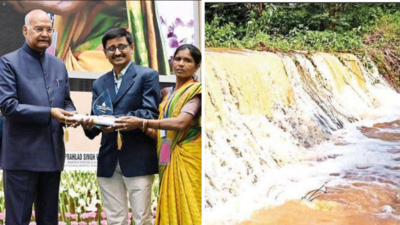
GP representatives recieve the honour; a check dam in the village
TUMAKURU: Water conservation efforts by Yelerampura gram panchayat in Tumakuru district, 90km from Bengaluru, over the last decade have finally paid off. The GP on Tuesday won the Union Jal Shakti ministry’s National Water Award in the ‘Best village panchayat – South Zone’ category.
The audio-visual released as part of the award ceremony featured the best water practices of Durgada Nagenahalli, a village with a population of around 750 people, including 250 farmers. The small village’s turnaround, from being a perpetually drought-hit area that saw only one crop per year to being dotted with greenery, has been interesting.
The transformation began when the village was brought under NICRA (National Innovations in Climate Resilient Agriculture) 10 years ago. In 2011-12, Krishi Vignan Kendra Hirehalli adopted the village. They introduced drought-tolerant varieties in red gram, groundnut and finger millet. Tree-based farming system has been increased to 200 per cent. The other initiatives in the village were:
Water conservation: Two lakh cubic metre volume of water is getting saved during monsoon which has helped in increasing the groundwater table. Five checkdams, 81 farm ponds and 150 hectares of land were brought under the trench-cum-bunding to prevent soil erosion and conserve water.
There is 66 hectares of tree-based farming, rainwater harvesting in 400 hectares, and desilting of farm ponds, check dams and tanks.
New commercial crops: N Loganandan, principal scientist of KVK, Hirehalli, said, “Native crop of D Nagenahalli is mango but KVK introduced cashew, amla, jamoon, tamarind and also drought-resistant paddy variety Pausti 9. It is grown using 50 per cent of the water than the normal paddy.”
Borewells recharged: More than 30 dried borewells have been recharged and many open wells are now filled to their maximum capacity. Farmer Mahesh NM said: “Earlier we had to dig borewells more than 1000ft, but now water is available at 200-300ft. I’m growing amla in my 1 acre 10 guntas of land. Earlier I was getting Rs 50,000-60,000 per annum by selling gooseberries from 250 trees. KVK introduced us to the processing technology and marketing of products. Now, I’m earning Rs 5-6 lakh by making value-added products like supari, chats, juice and candy from amla.”
FOLLOW US ON SOCIAL MEDIA
GP representatives recieve the honour; a check dam in the villageTUMAKURU: Water conservation efforts by Yelerampura gram panchayat in Tumakuru district, 90km from Bengaluru, over the last decade have finally paid off. The GP on Tuesday won the Union Jal Shakti ministry’s National Water Award in the ‘Best village panchayat – South Zone’ category. The audio-visual released as part of the award ceremony featured the best water practices of Durgada Nagenahalli, a village with a population of around 750 people, including 250 farmers. The small village’s turnaround, from being a perpetually drought-hit area that saw only one crop per year to being dotted with greenery, has been interesting. The transformation began when the village was brought under NICRA (National Innovations in Climate Resilient Agriculture) 10 years ago. In 2011-12, Krishi Vignan Kendra Hirehalli adopted the village. They introduced drought-tolerant varieties in red gram, groundnut and finger millet. Tree-based farming system has been increased to 200 per cent. The other initiatives in the village were: Water conservation: Two lakh cubic metre volume of water is getting saved during monsoon which has helped in increasing the groundwater table. Five checkdams, 81 farm ponds and 150 hectares of land were brought under the trench-cum-bunding to prevent soil erosion and conserve water. There is 66 hectares of tree-based farming, rainwater harvesting in 400 hectares, and desilting of farm ponds, check dams and tanks. New commercial crops: N Loganandan, principal scientist of KVK, Hirehalli, said, “Native crop of D Nagenahalli is mango but KVK introduced cashew, amla, jamoon, tamarind and also drought-resistant paddy variety Pausti 9. It is grown using 50 per cent of the water than the normal paddy.” Borewells recharged: More than 30 dried borewells have been recharged and many open wells are now filled to their maximum capacity. Farmer Mahesh NM said: “Earlier we had to dig borewells more than 1000ft, but now water is available at 200-300ft. I’m growing amla in my 1 acre 10 guntas of land. Earlier I was getting Rs 50,000-60,000 per annum by selling gooseberries from 250 trees. KVK introduced us to the processing technology and marketing of products. Now, I’m earning Rs 5-6 lakh by making value-added products like supari, chats, juice and candy from amla.” FOLLOW US ON SOCIAL MEDIA