

After dropping to a low of Rs 1,298 apiece, the stock finished at Rs 1,380, its lowest level since November 22, the second day of listing
Topics
Paytm | Anchor investors | One97 Communications
Samie Modak |
Last Updated at December 15, 2021 22:45 IST
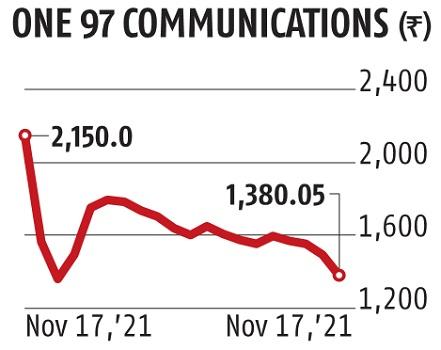
Shares of One97 Communications, the parent of Paytm, declined nearly 8 per cent on Wednesday as the 30-day lock-in period for anchor investors ended. The stock tumbled as much as 13 per cent before recouping some losses.
After dropping to a low of Rs 1,298 apiece, the stock finished at Rs 1,380, its lowest level since November 22, the second day of listing.
The latest downfall reversed the digital payments major’s slow climb towards its initial public offering (IPO) price of Rs 2,150 per share. Paytm’s shares have now declined 36 per cent over its IPO price and 23 per cent over its post-listing high of Rs 1,797 hit on November 25.
Despite being backed by top global investors, including Masayoshi Son’s SoftBank, Warren Buffett’s Berkshire Hathaway, and Jack Ma’s Ant Group, shares of Paytm have been on a wild ride post listing.
Market players said some anchor investors received more allotment than they had desired in the anchor book, prompting them to pare holdings. Nearly, Rs 1,800 crore worth of Paytm shares changed hands on Wednesday.
Paytm had allotted shares worth Rs 8,235 crore to anchor investors ahead of its Rs 18,300-crore IPO, the largest offering in the domestic market.
Among the investors who got the highest allotment in the anchor book were Blackrock, Canada Pension Plan Investment Board, and Singapore’s GIC.
According to an analysis by Edelweiss Alternative Research, ahead of the expiry of the lock-in, anchor investors held nearly 5.9 per cent stake in Paytm — slightly more than other new age companies such as Nykaa (4.5 per cent) and Policybazaar (5.8 per cent). Shares of Nykaa and Policybazaar had fallen 2 per cent and 3.5 per cent, respectively, after their lock-in periods ended.
The fall in Paytm shares after the lock-in’s expiry is more than that seen by most other companies this year.
According to Edelweiss, 25 of the 41 IPOs this year have ended in losses on the day of lock-in expiry. However, the average decline is just 2.2 per cent.
Market experts say investors are still grappling with how they should value Paytm, which has no clear profit visibility. In the September quarter, the first quarterly results declared by the company after going public, Paytm reported widening of losses to Rs 474 crore amid rising expenses. Revenues, however, soared 60 per cent thanks to strong growth in its financial, commerce and cloud services businesses.
Macquarie Capital, JM Financial, and Dolat Capital are among the few brokerages that have coverage on the stock at present. Macquarie has an ‘underperform’ rating and JM Financial has a ‘sell’ rating. Meanwhile, Dolat has a ‘buy’ call on the stock with a price target of Rs 2,500, 16 per cent higher than the IPO price.
Analysts at Dolat believe Paytm has as one of the strongest digital brands to garner a significant share of opportunities that will evolve in the Indian internet ecosystem.
 Dear Reader,
Business Standard has always strived hard to provide up-to-date information and commentary on developments that are of interest to you and have wider political and economic implications for the country and the world. Your encouragement and constant feedback on how to improve our offering have only made our resolve and commitment to these ideals stronger. Even during these difficult times arising out of Covid-19, we continue to remain committed to keeping you informed and updated with credible news, authoritative views and incisive commentary on topical issues of relevance.
We, however, have a request.
As we battle the economic impact of the pandemic, we need your support even more, so that we can continue to offer you more quality content. Our subscription model has seen an encouraging response from many of you, who have subscribed to our online content. More subscription to our online content can only help us achieve the goals of offering you even better and more relevant content. We believe in free, fair and credible journalism. Your support through more subscriptions can help us practise the journalism to which we are committed.
Support quality journalism and subscribe to Business Standard.
Digital Editor
After dropping to a low of Rs 1,298 apiece, the stock finished at Rs 1,380, its lowest level since November 22, the second day of listing Topics Paytm | Anchor investors | One97 Communications Samie Modak | Mumbai Last Updated at December 15, 2021 22:45 IST Shares of One97 Communications, the parent of Paytm, declined nearly 8 per cent on Wednesday as the 30-day lock-in period for anchor investors ended. The stock tumbled as much as 13 per cent before recouping some losses. After dropping to a low of Rs 1,298 apiece, the stock finished at Rs 1,380, its lowest level since November 22, the second day of listing. The latest downfall reversed the digital payments major’s slow climb towards its initial public offering (IPO) price of Rs 2,150 per share. Paytm’s shares have now declined 36 per cent over its IPO price and 23 per cent over its post-listing high of Rs 1,797 hit on November 25. Despite being backed by top global investors, including Masayoshi Son’s SoftBank, Warren Buffett’s Berkshire Hathaway, and Jack Ma’s Ant Group, shares of Paytm have been on a wild ride post listing. Market players said some anchor investors received more allotment than they had desired in the anchor book, prompting them to pare holdings. Nearly, Rs 1,800 crore worth of Paytm shares changed hands on Wednesday. Paytm had allotted shares worth Rs 8,235 crore to anchor investors ahead of its Rs 18,300-crore IPO, the largest offering in the domestic market. Among the investors who got the highest allotment in the anchor book were Blackrock, Canada Pension Plan Investment Board, and Singapore’s GIC. According to an analysis by Edelweiss Alternative Research, ahead of the expiry of the lock-in, anchor investors held nearly 5.9 per cent stake in Paytm — slightly more than other new age companies such as Nykaa (4.5 per cent) and Policybazaar (5.8 per cent). Shares of Nykaa and Policybazaar had fallen 2 per cent and 3.5 per cent, respectively, after their lock-in periods ended. The fall in Paytm shares after the lock-in’s expiry is more than that seen by most other companies this year. According to Edelweiss, 25 of the 41 IPOs this year have ended in losses on the day of lock-in expiry. However, the average decline is just 2.2 per cent. Market experts say investors are still grappling with how they should value Paytm, which has no clear profit visibility. In the September quarter, the first quarterly results declared by the company after going public, Paytm reported widening of losses to Rs 474 crore amid rising expenses. Revenues, however, soared 60 per cent thanks to strong growth in its financial, commerce and cloud services businesses. Macquarie Capital, JM Financial, and Dolat Capital are among the few brokerages that have coverage on the stock at present. Macquarie has an ‘underperform’ rating and JM Financial has a ‘sell’ rating. Meanwhile, Dolat has a ‘buy’ call on the stock with a price target of Rs 2,500, 16 per cent higher than the IPO price. Analysts at Dolat believe Paytm has as one of the strongest digital brands to garner a significant share of opportunities that will evolve in the Indian internet ecosystem. Dear Reader, Business Standard has always strived hard to provide up-to-date information and commentary on developments that are of interest to you and have wider political and economic implications for the country and the world. Your encouragement and constant feedback on how to improve our offering have only made our resolve and commitment to these ideals stronger. Even during these difficult times arising out of Covid-19, we continue to remain committed to keeping you informed and updated with credible news, authoritative views and incisive commentary on topical issues of relevance. We, however, have a request. As we battle the economic impact of the pandemic, we need your support even more, so that we can continue to offer you more quality content. Our subscription model has seen an encouraging response from many of you, who have subscribed to our online content. More subscription to our online content can only help us achieve the goals of offering you even better and more relevant content. We believe in free, fair and credible journalism. Your support through more subscriptions can help us practise the journalism to which we are committed. Support quality journalism and subscribe to Business Standard. Digital Editor