
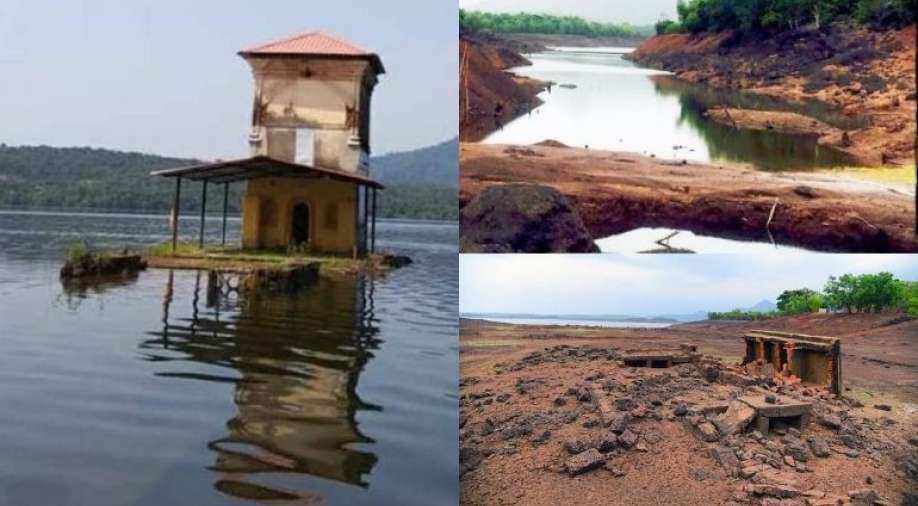
Curdi was formerly a thriving village community with approximately 600 families in the South Goa district.
It is nestled among the Western Ghats, with the Salaulim river running through it.
But that was all in the past because the lovely hamlet vanished beneath the waves.
Since then, it has been a ghost town.
It spends 11 months of the year underwater in the Salaulim Dam’s waters.
The water levels drop just before the monsoons strike Goa in early June, and the village reappears for a moment.
Actually, not just Curdi, but roughly 17 villages in Goa’s Sanguem Taluka were evacuated to make space for the Salaulim dam’s catchment area.
The dam was conceived by Goa’s first chief minister in the late 1970s.
Villagers were relocated in 1983-84 to the neighbouring villages of Velip and Valkini.
On the banks of the Kushavati River, the villagers lived.
Someshwar Temple was built on a rocky outcropping near the river’s edge.
It stands towering now as a memory of the hamlet that once surrounded it.
Despite being submerged for more than 35 years, the village’s dwellings, temples, caverns, and paths have managed to survive.
They’ll give up one way or another.
As a result, visiting Curdi is like visiting a piece of Goa’s past that you knew would be lost to future generations.
Even if some of these indicators of civilization survive, the condition of affairs will change with each passing year.
Do you know about the place in Goa that submerges underwater during the rainy season? It is only accessible during summer. The abandoned curdi village is where we go for summer shoots it is our version of Atlantis
.
Follow @goatourismasg pic.twitter.com/qj9gPfYpdD— ASG Goa (@goatourismasg) June 24, 2020
When should you go to Curdi village?
In Goa, there is just a brief window when you can visit the village.
The best time to visit the village is in the second part of May.
You can check the monsoon forecast and plan your trip to arrive as late as possible before the pre-monsoon showers arrive in Goa.
Depending on how low the water levels have dropped, you’ll be able to see more of the village and its ruins.
So, save for select high points like the hilltop Someshwar Temple, what you see each year is slightly different.
(With inputs from agencies)
Curdi was formerly a thriving village community with approximately 600 families in the South Goa district. It is nestled among the Western Ghats, with the Salaulim river running through it. But that was all in the past because the lovely hamlet vanished beneath the waves. Since then, it has been a ghost town. It spends 11 months of the year underwater in the Salaulim Dam’s waters. The water levels drop just before the monsoons strike Goa in early June, and the village reappears for a moment. Actually, not just Curdi, but roughly 17 villages in Goa’s Sanguem Taluka were evacuated to make space for the Salaulim dam’s catchment area. The dam was conceived by Goa’s first chief minister in the late 1970s. Villagers were relocated in 1983-84 to the neighbouring villages of Velip and Valkini. On the banks of the Kushavati River, the villagers lived. Someshwar Temple was built on a rocky outcropping near the river’s edge. It stands towering now as a memory of the hamlet that once surrounded it. Despite being submerged for more than 35 years, the village’s dwellings, temples, caverns, and paths have managed to survive. They’ll give up one way or another. As a result, visiting Curdi is like visiting a piece of Goa’s past that you knew would be lost to future generations. Even if some of these indicators of civilization survive, the condition of affairs will change with each passing year. Do you know about the place in Goa that submerges underwater during the rainy season? It is only accessible during summer. The abandoned curdi village is where we go for summer shoots it is our version of Atlantis . Follow @goatourismasg pic.twitter.com/qj9gPfYpdD — ASG Goa (@goatourismasg) June 24, 2020 × When should you go to Curdi village? In Goa, there is just a brief window when you can visit the village. The best time to visit the village is in the second part of May. You can check the monsoon forecast and plan your trip to arrive as late as possible before the pre-monsoon showers arrive in Goa. Depending on how low the water levels have dropped, you’ll be able to see more of the village and its ruins. So, save for select high points like the hilltop Someshwar Temple, what you see each year is slightly different. (With inputs from agencies)