
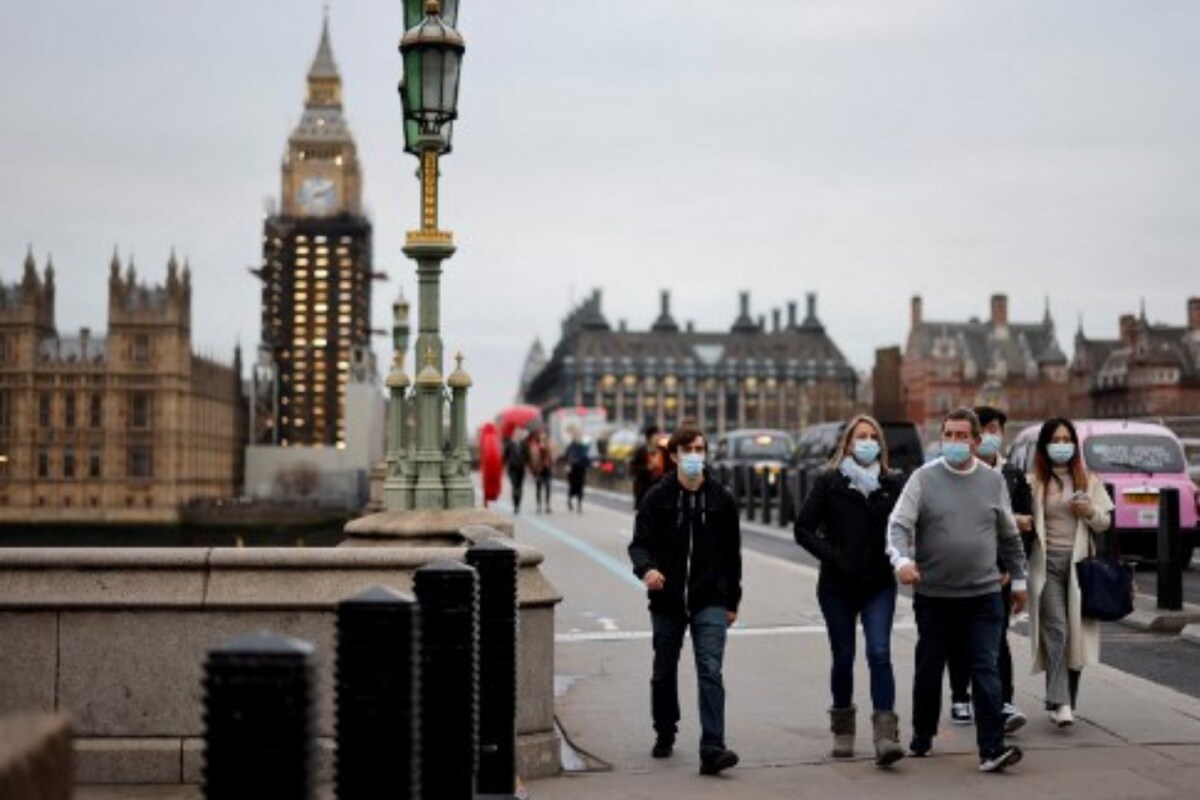

People walk past the Big Ben clock at the Houses of Parliament in central London on December 16, 2021 as some scaffolding is removed with restoration project nearing its end.
Tolga Akmen / AFP
Gross domestic product grew 1.1 percent in the July-September period as the economy reopened.
- AFP London
- Last Updated:December 22, 2021, 15:40 IST
- FOLLOW US ON:
Britain’s economic recovery from pandemic fallout slowed more sharply than previously thought in the third quarter even before the arrival of the Omicron variant, official data showed Wednesday.
Gross domestic product grew 1.1 percent in the July-September period as the economy reopened, the Office for National Statistics (ONS) said in a statement.
That compared with the prior estimate of 1.3 percent, and followed a downwardly-revised 5.4 percent growth in the second quarter as global supply disruptions hurt businesses.
Economists predict the slowdown will extend into the fourth quarter due to recent curbs aimed at tackling the spread of the Omicron coronavirus strain that emerged in November, while surging inflation and a Bank of England interest rate hike is also set to weigh.
Nevertheless, the ONS added Wednesday that the economy was closer to its pre-pandemic level in the third quarter as a result of an upgrade to last year’s data.
Gross domestic product (GDP) shrank by 9.4 percent in 2020 on fallout from the Covid-19 emergency health crisis.
That was up from the prior figure of a 9.7-percent contraction.
“Our revised figures show UK GDP recovered a little slower in the third quarter, with much weaker performances from health and hairdressers across the quarter, and the energy sector contracting more in September than we previously estimated,” said ONS official Darren Morgan.
“However, stronger data for 2020 means the economy was closer to pre-pandemic levels in the third quarter.”
He also noted that households saved less cash as the economy reopened, but saving was still up on pre-pandemic levels.
The economy is meanwhile forecast to take a major hit from new coronavirus restrictions imposed earlier this month in reaction to rampant Covid infection rates.
“The downward revision to GDP in the third quarter means the economy had a little less momentum going into the closing months of the year than we previously thought,” noted economist Bethany Beckett at Capital Economics.
“And given early signs that the huge surge in Covid-19 infections has weighed on activity so far in December, growth looks to have slowed in the fourth quarter.”
Read all the Latest News, Breaking News and Coronavirus News here.
People walk past the Big Ben clock at the Houses of Parliament in central London on December 16, 2021 as some scaffolding is removed with restoration project nearing its end. Tolga Akmen / AFP Gross domestic product grew 1.1 percent in the July-September period as the economy reopened.AFP LondonLast Updated:December 22, 2021, 15:40 ISTFOLLOW US ON:Britain’s economic recovery from pandemic fallout slowed more sharply than previously thought in the third quarter even before the arrival of the Omicron variant, official data showed Wednesday.Gross domestic product grew 1.1 percent in the July-September period as the economy reopened, the Office for National Statistics (ONS) said in a statement.That compared with the prior estimate of 1.3 percent, and followed a downwardly-revised 5.4 percent growth in the second quarter as global supply disruptions hurt businesses.Economists predict the slowdown will extend into the fourth quarter due to recent curbs aimed at tackling the spread of the Omicron coronavirus strain that emerged in November, while surging inflation and a Bank of England interest rate hike is also set to weigh.Nevertheless, the ONS added Wednesday that the economy was closer to its pre-pandemic level in the third quarter as a result of an upgrade to last year’s data.Gross domestic product (GDP) shrank by 9.4 percent in 2020 on fallout from the Covid-19 emergency health crisis.That was up from the prior figure of a 9.7-percent contraction.“Our revised figures show UK GDP recovered a little slower in the third quarter, with much weaker performances from health and hairdressers across the quarter, and the energy sector contracting more in September than we previously estimated,” said ONS official Darren Morgan.“However, stronger data for 2020 means the economy was closer to pre-pandemic levels in the third quarter.”He also noted that households saved less cash as the economy reopened, but saving was still up on pre-pandemic levels.The economy is meanwhile forecast to take a major hit from new coronavirus restrictions imposed earlier this month in reaction to rampant Covid infection rates. “The downward revision to GDP in the third quarter means the economy had a little less momentum going into the closing months of the year than we previously thought,” noted economist Bethany Beckett at Capital Economics.“And given early signs that the huge surge in Covid-19 infections has weighed on activity so far in December, growth looks to have slowed in the fourth quarter.”Read all the Latest News, Breaking News and Coronavirus News here.