
Most remaining public health restrictions will be lifted in Alberta on Tuesday as the province proceeds with the second phase of moving to an endemic approach to COVID-19.
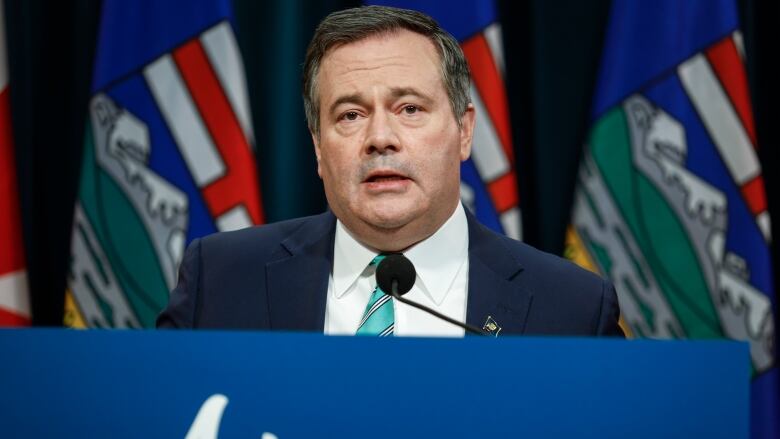
Almost all remaining public health restrictions in Alberta will be lifted on Tuesday as the province proceeds with the second phase of moving to an endemic approach to COVID-19.
The “vast majority” of restrictions will end, Premier Jason Kenney said Saturday, during a ribbon-cutting at the new Grande Prairie Regional Hospital.
“I know there are some who greet the lifting of restrictions with mixed emotions. But I want to remind you, Alberta is not alone in this approach,” Kenney said. He noted that other jurisdictions, such as the United Kingdom, are also lifting restrictions.
Under Step 2, remaining school requirements; youth screening for entertainment and sport activities; capacity limits at large and entertainment venues; operating restrictions on restaurants and bars such as liquor services; all social gathering limits; and mandatory work-from-home requirements will all be lifted.
Indoor masking will no longer be required, except, Kenney said, in “higher-risk settings,” including public transit, Alberta Health Services facilities and continuing-care settings.
The Alberta government’s three-step plan to lifting restrictions had Step 2 beginning on March 1, if hospitalizations were still trending downward.
“Fortunately, all signs here and across the world suggest that the worst of COVID-19 is behind us. The pressure on our health-care system is easing as hospitalizations due to COVID-19 are declining,” Kenney said.
As of Friday, there were 1,259 people in hospital for COVID-19, including 88 in intensive care.
Provincial data shows non-ICU hospitalizations have been generally declining for over two weeks, while the number of ICU admissions has dropped almost 30 per cent in the past week.
The data shows “no evidence at this point to suggest that our transition to normal is negatively affecting our health-care system,” Kenney said.
Health Minister Jason Copping, who joined Saturday’s announcement, noted the government will continue monitoring COVID-19 in the province.
“We are proceeding through our transition carefully and prudently, which is why we are maintaining protections for places such as continuing-care [settings] and hospitals,” Copping said.
“That said, we are confident about our approach.”
The premier had forecast the shift to Step 2 earlier this week.
Under Step 1, which started Feb. 9, Alberta removed the restrictions exemption program — the province’s version of the vaccine passport — and “most associated restrictions.”
Capacity limits in “large facilities” and entertainment venues were extended, and food and beverage consumption was allowed in seats.
Mandatory masking requirements in schools, and for children under 13 in all settings, were removed Feb. 14.
But there were still restrictions in place for “food-serving entities” and physical distancing between people from different households was encouraged.
Calgary mask bylaw to end
The City of Calgary said its mask bylaw will end once the restrictions are lifted Tuesday.
The city is “cautiously optimistic” about entering this stage of the pandemic, Susan Henry, chief of the Calgary Emergency Management Agency, said in a news release Saturday.
“Some of us will welcome the lifting of restrictions while others will prefer to continue wearing face coverings and following other precautions,” Henry said.
“We must be kind and compassionate toward one another, respect those personal choices and make space for everyone to move at the speed they feel comfortable with.”
The city reminded residents they must continue wearing masks until Tuesday.
Most remaining public health restrictions will be lifted in Alberta on Tuesday as the province proceeds with the second phase of moving to an endemic approach to COVID-19.Alberta Premier Jason Kenney, seen here delivering a COVID-19 update in Calgary earlier this month, announced the move to Step 2 of lifting restrictions while in Grande Prairie, Alta., on Saturday. (Jeff McIntosh/The Canadian Press)Almost all remaining public health restrictions in Alberta will be lifted on Tuesday as the province proceeds with the second phase of moving to an endemic approach to COVID-19. The “vast majority” of restrictions will end, Premier Jason Kenney said Saturday, during a ribbon-cutting at the new Grande Prairie Regional Hospital. “I know there are some who greet the lifting of restrictions with mixed emotions. But I want to remind you, Alberta is not alone in this approach,” Kenney said. He noted that other jurisdictions, such as the United Kingdom, are also lifting restrictions. Under Step 2, remaining school requirements; youth screening for entertainment and sport activities; capacity limits at large and entertainment venues; operating restrictions on restaurants and bars such as liquor services; all social gathering limits; and mandatory work-from-home requirements will all be lifted. Indoor masking will no longer be required, except, Kenney said, in “higher-risk settings,” including public transit, Alberta Health Services facilities and continuing-care settings. The Alberta government’s three-step plan to lifting restrictions had Step 2 beginning on March 1, if hospitalizations were still trending downward. “Fortunately, all signs here and across the world suggest that the worst of COVID-19 is behind us. The pressure on our health-care system is easing as hospitalizations due to COVID-19 are declining,” Kenney said. As of Friday, there were 1,259 people in hospital for COVID-19, including 88 in intensive care. Provincial data shows non-ICU hospitalizations have been generally declining for over two weeks, while the number of ICU admissions has dropped almost 30 per cent in the past week. The data shows “no evidence at this point to suggest that our transition to normal is negatively affecting our health-care system,” Kenney said. Health Minister Jason Copping, who joined Saturday’s announcement, noted the government will continue monitoring COVID-19 in the province. “We are proceeding through our transition carefully and prudently, which is why we are maintaining protections for places such as continuing-care [settings] and hospitals,” Copping said. “That said, we are confident about our approach.” The premier had forecast the shift to Step 2 earlier this week. Under Step 1, which started Feb. 9, Alberta removed the restrictions exemption program — the province’s version of the vaccine passport — and “most associated restrictions.” Capacity limits in “large facilities” and entertainment venues were extended, and food and beverage consumption was allowed in seats. Mandatory masking requirements in schools, and for children under 13 in all settings, were removed Feb. 14. But there were still restrictions in place for “food-serving entities” and physical distancing between people from different households was encouraged. Calgary mask bylaw to end The City of Calgary said its mask bylaw will end once the restrictions are lifted Tuesday. The city is “cautiously optimistic” about entering this stage of the pandemic, Susan Henry, chief of the Calgary Emergency Management Agency, said in a news release Saturday. “Some of us will welcome the lifting of restrictions while others will prefer to continue wearing face coverings and following other precautions,” Henry said. “We must be kind and compassionate toward one another, respect those personal choices and make space for everyone to move at the speed they feel comfortable with.” The city reminded residents they must continue wearing masks until Tuesday.