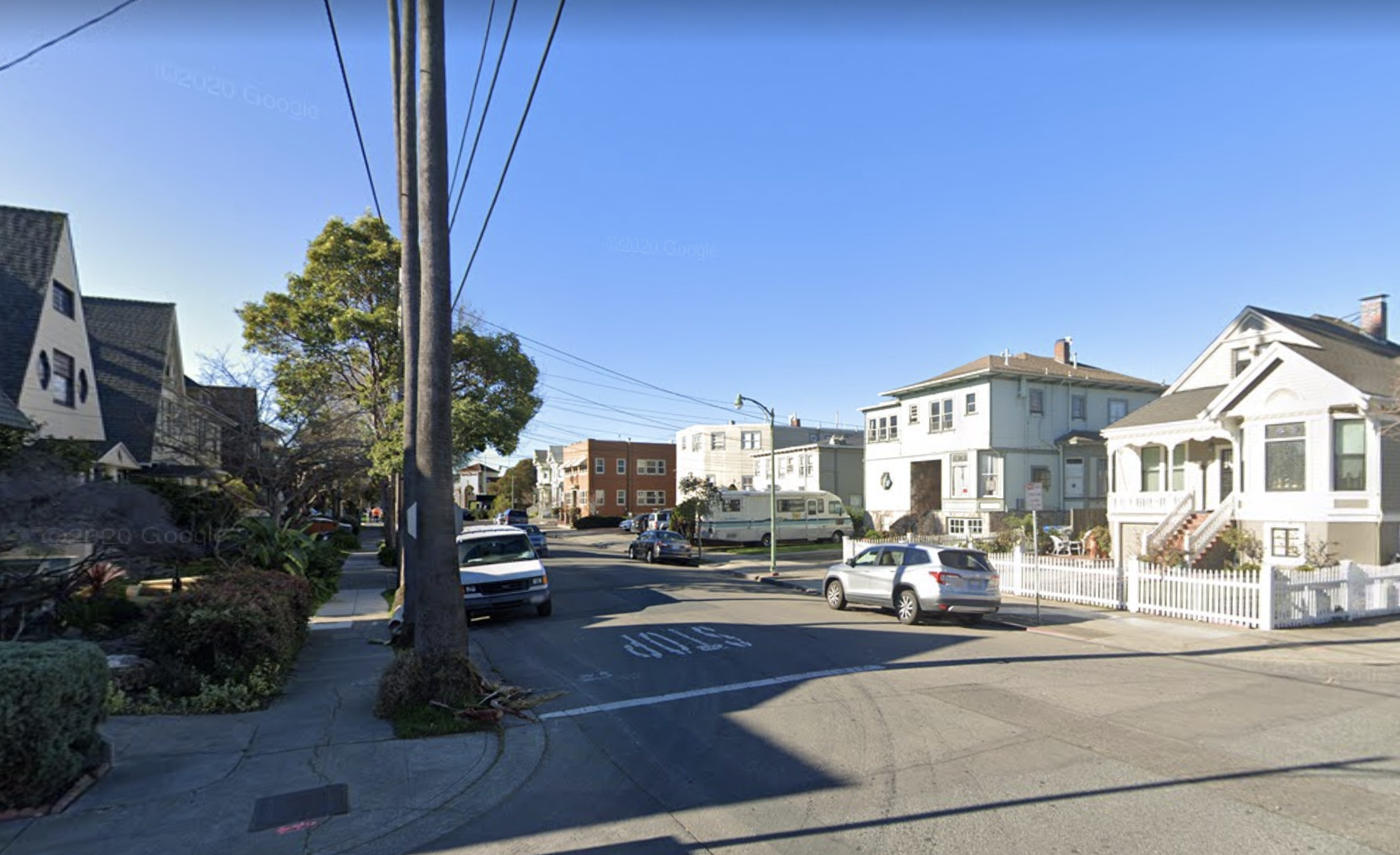
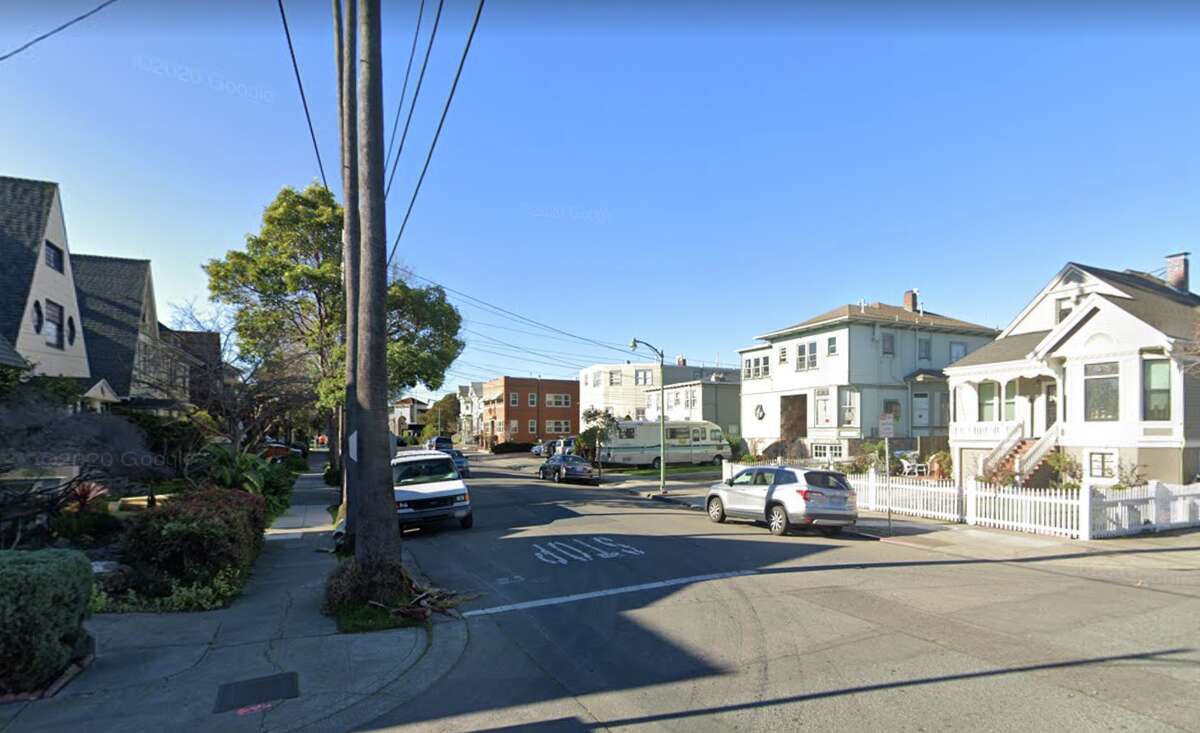
The intersection of Lincoln Avenue and Everett Street in Alameda, Calif., where Richard Bischel Sr. was stabbed to death in March 1977.
Google Street ViewThe brutal murder of an Alameda man in front of his teenage son 45 years ago has been solved, police announced Tuesday.
Richard Bischel was awakened by his 17-year-old son at 2:30 a.m. on March 16, 1977. Richard Jr. worriedly told his father that he thought he heard a noise on the front porch of their home near Lincoln and Everett. He was right. Outside, the pair saw a burglar casing the house. The Bischels burst out the front door, chasing the burglar down the street. Richard Sr. outpaced his son, tearing around the corner after the would-be intruder. When Richard Jr. caught up with them, the suspect was gone — and his father was bleeding from at least 10 stab wounds. Richard Bischel was rushed into surgery but died an hour later; he was 43.
It didn’t take long for police to identify a suspect: Richard Curley Bernard, a 23-year-old who police now say committed at least 100 burglaries and two rapes between 1973 and 1977. When investigators searched Bernard’s residence in 1977, they discovered a jacket with blood on it. Due to the forensic limitations of the time, all they could determine was the blood was human. It wasn’t enough to arrest Bernard.
The case sat on the shelf for four more decades until Alameda’s cold case unit, composed of three retired police officers, recently submitted the jacket for DNA testing. The blood returned as a match for Bischel’s, confirming the long-held suspicion that Bernard was the murderer.
“We hope this approach can serve as a model for the rest of the country to help bring justice to the victims of over 260,000 unsolved homicides in the United States,” Alameda police Chief Nishant Joshi said at a press conference Tuesday.
The last bit of justice remains elusive, however. After being incarcerated and paroled for a different crime in the 1980s, Bernard moved to Texas. There, he was shot and killed in 1989.
“It’s been a long, hard road,” Richard Jr. said at the press conference, “but I’m glad we have a final resolution to this.”
The intersection of Lincoln Avenue and Everett Street in Alameda, Calif., where Richard Bischel Sr. was stabbed to death in March 1977. Google Street View The brutal murder of an Alameda man in front of his teenage son 45 years ago has been solved, police announced Tuesday. Richard Bischel was awakened by his 17-year-old son at 2:30 a.m. on March 16, 1977. Richard Jr. worriedly told his father that he thought he heard a noise on the front porch of their home near Lincoln and Everett. He was right. Outside, the pair saw a burglar casing the house. The Bischels burst out the front door, chasing the burglar down the street. Richard Sr. outpaced his son, tearing around the corner after the would-be intruder. When Richard Jr. caught up with them, the suspect was gone — and his father was bleeding from at least 10 stab wounds. Richard Bischel was rushed into surgery but died an hour later; he was 43. It didn’t take long for police to identify a suspect: Richard Curley Bernard, a 23-year-old who police now say committed at least 100 burglaries and two rapes between 1973 and 1977. When investigators searched Bernard’s residence in 1977, they discovered a jacket with blood on it. Due to the forensic limitations of the time, all they could determine was the blood was human. It wasn’t enough to arrest Bernard. The case sat on the shelf for four more decades until Alameda’s cold case unit, composed of three retired police officers, recently submitted the jacket for DNA testing. The blood returned as a match for Bischel’s, confirming the long-held suspicion that Bernard was the murderer. “We hope this approach can serve as a model for the rest of the country to help bring justice to the victims of over 260,000 unsolved homicides in the United States,” Alameda police Chief Nishant Joshi said at a press conference Tuesday. The last bit of justice remains elusive, however. After being incarcerated and paroled for a different crime in the 1980s, Bernard moved to Texas. There, he was shot and killed in 1989. “It’s been a long, hard road,” Richard Jr. said at the press conference, “but I’m glad we have a final resolution to this.”