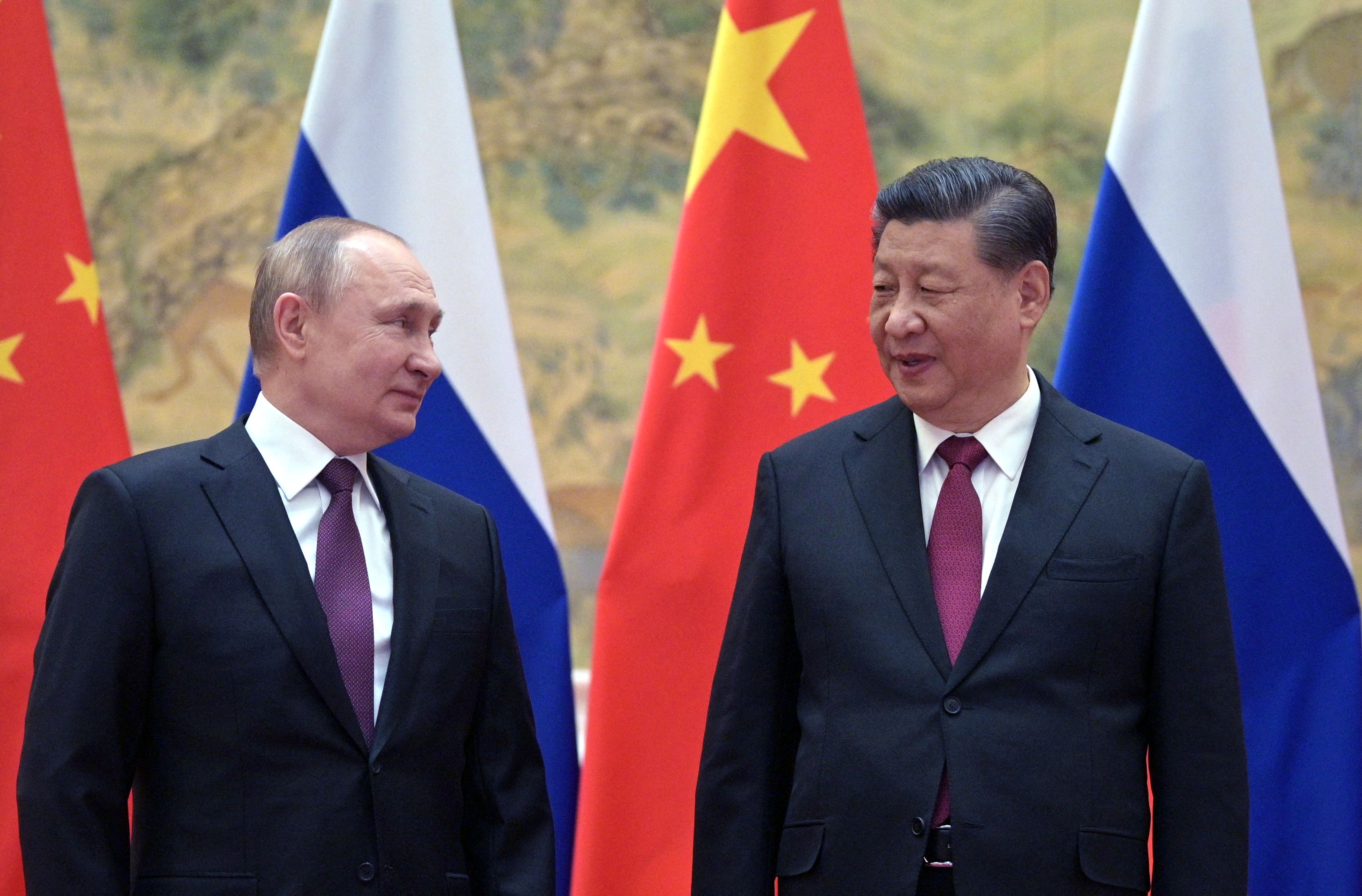
Chinese officials have said their relations with Russia continue to deepen despite the international backlash regarding Moscow’s military moves against Ukraine, but they dismissed speculation that Beijing had endorsed the Kremlin’s plan to attack the neighboring country.
Chinese President Xi Jinping and Russian President Vladimir Putin openly fortified their nations’ “comprehensive strategic partnership of coordination for the new era” during a summit held in Beijing earlier this month as the Winter Olympic Games began. Just a day after the international sporting event ended, however, Putin offered recognition of two separatist, self-proclaimed republics in Ukraine’s eastern Donbas region and sent troops he deemed “peacekeepers” to support them, laying the groundwork for a “special military operation” he ultimately commenced late Wednesday.
The timing of the two events and the unprecedented closeness of the ties between China and Russia have prompted speculation as to whether Putin may have informed Xi of his plans ahead of time and that his Chinese counterpart could have even signed off on the move.
But Liu Pengyu, spokesperson for China’s embassy in Washington, told a small press briefing attended by Newsweek that such rumors were unfounded.
“There are many reports regarding whether there was discussion between China and Russia before Russia’s special military action,” Liu said. “And there’s even a saying that China supported the military action, but that is kind of, in my words, a conspiracy theory.”
“Russia is a permanent member of the U.N. Security Council,” he added. “It’s a big power. I think Russia has its own judgment or has its own decision on foreign policy and foreign military actions.”
And while China has weighed in decisively on Russia’s side, Beijing has echoed Moscow’s talking points blaming the conflict on the eastward expansion of the NATO alliance and U.S. military assistance to Ukraine. Chinese officials have also rejected any interest in joining an increasingly wide chorus of countries issuing sanctions against Russia.
And, in fact, Liu said the bonds the two major powers have forged were only growing stronger.
“The China-Russia comprehensive strategic partnership of cooperation has been deepening,” Liu said. “Our relations feature non-confrontation, non-alliance and non-targeting of any third parties.”
He pointed to the joint statement adopted by Xi and Putin after their February 4 summit, noting how it “spelled out our common positions on various things.” Among the sentiments expressed in this statement was China declaring it was “sympathetic to and supports the proposals put forward by the Russian Federation to create long-term legally binding security guarantees in Europe and Russia.”
“And I think we will continue to develop our relations on the basis of equality, mutual trust and mutual benefits,” Liu said.
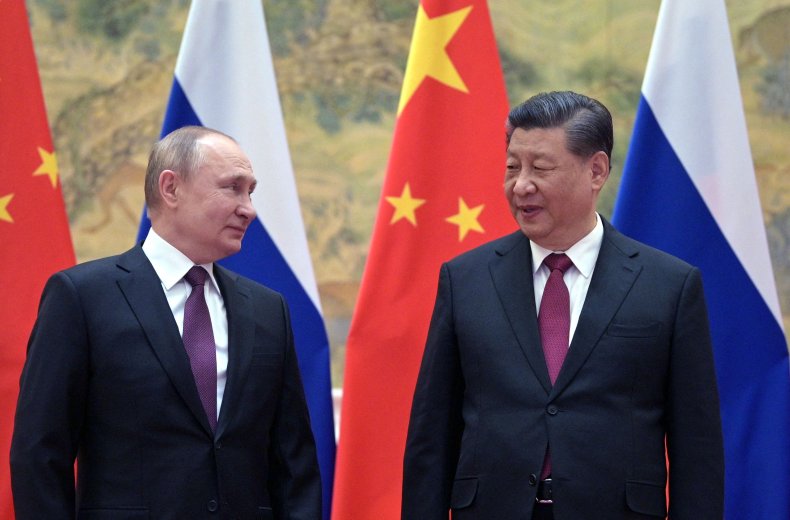
ALEXEI DRUZHININ/SPUTNIK/AFP/Getty Images
While NATO has traditionally focused on European security with its Cold War roots in countering the Soviet Union, China has shared Russia’s skepticism toward its military activities.
Chinese Foreign Ministry spokesperson Hua Chunying recently pointed out that the alliance still owed Beijing “a debt of blood” over a U.S. airstrike that hit China’s embassy in Belgrade, killing three people and injuring at least 20, during the NATO bombing of Yugoslavia in 1999. Chinese officials have also countered criticisms of their country’s own growing nuclear arsenal by highlighting the proliferation of U.S. nuclear weapons in non-nuclear allied states in Europe.
In his speech announcing the commencement of a military incursion into Ukraine, Putin alleged that Ukraine too was seeking nuclear weapons that could potentially threaten Russia. Kyiv has denied this narrative and sought further Western backing to take on Russian forces advancing on several fronts, including around the capital.
As for China’s position, Liu said Monday that NATO members “have the right to accept any party to join NATO, but they also have the right to refuse any party to join NATO.”
“That is a decision of NATO, whether it will expand or not, whether it’s the better position for them to expand, whether the expansion of NATO is helpful or constructive to the situation in Europe,” he added.
Here too, however, Liu echoed Moscow’s position that such decisions had to be made with the security of other states in mind.
“We want to stress that the security of one country cannot be achieved at the expense of the other and still less should the regional security be guaranteed by expanding military blocs,” Liu said.
But “right now,” he argued, “the priority is to cool the situation.”
“The door to political settlement is not completely closed.” he added, “and we believe it’s imperative for all parties to make diplomatic efforts to give priority to de-escalating the tension and to seeking a solution to this problem through dialogue and negotiations.”
And Beijing may prove an influential factor in promoting talks to defuse one of Europe’s most explosive conflicts in decades. As the war entered its second day on Friday, Xi and Putin held a phone call in which the former said “China supports Russia in resolving the issue through negotiation with Ukraine,” according to the Chinese Foreign Ministry.
Putin then announced Russia would seek direct talks with Ukraine’s leadership and negotiations were held Monday in the Belarusian city of Gomel. Liu noted that it was Beijing that sought Moscow to pursue diplomacy, and argued this was the correct approach as opposed to sending arms as the U.S. and other NATO countries have done.
“During the phone call between President Xi and President Putin, it is reiterated that China supports Russia to negotiate, to have a dialogue with Ukraine,” Liu said. “And I don’t think we should give more weapons to fuel the situation.”
This is a developing news story. More information will be added as it becomes available.
Chinese officials have said their relations with Russia continue to deepen despite the international backlash regarding Moscow’s military moves against Ukraine, but they dismissed speculation that Beijing had endorsed the Kremlin’s plan to attack the neighboring country.Chinese President Xi Jinping and Russian President Vladimir Putin openly fortified their nations’ “comprehensive strategic partnership of coordination for the new era” during a summit held in Beijing earlier this month as the Winter Olympic Games began. Just a day after the international sporting event ended, however, Putin offered recognition of two separatist, self-proclaimed republics in Ukraine’s eastern Donbas region and sent troops he deemed “peacekeepers” to support them, laying the groundwork for a “special military operation” he ultimately commenced late Wednesday.The timing of the two events and the unprecedented closeness of the ties between China and Russia have prompted speculation as to whether Putin may have informed Xi of his plans ahead of time and that his Chinese counterpart could have even signed off on the move.But Liu Pengyu, spokesperson for China’s embassy in Washington, told a small press briefing attended by Newsweek that such rumors were unfounded.”There are many reports regarding whether there was discussion between China and Russia before Russia’s special military action,” Liu said. “And there’s even a saying that China supported the military action, but that is kind of, in my words, a conspiracy theory.””Russia is a permanent member of the U.N. Security Council,” he added. “It’s a big power. I think Russia has its own judgment or has its own decision on foreign policy and foreign military actions.”And while China has weighed in decisively on Russia’s side, Beijing has echoed Moscow’s talking points blaming the conflict on the eastward expansion of the NATO alliance and U.S. military assistance to Ukraine. Chinese officials have also rejected any interest in joining an increasingly wide chorus of countries issuing sanctions against Russia.And, in fact, Liu said the bonds the two major powers have forged were only growing stronger.”The China-Russia comprehensive strategic partnership of cooperation has been deepening,” Liu said. “Our relations feature non-confrontation, non-alliance and non-targeting of any third parties.”He pointed to the joint statement adopted by Xi and Putin after their February 4 summit, noting how it “spelled out our common positions on various things.” Among the sentiments expressed in this statement was China declaring it was “sympathetic to and supports the proposals put forward by the Russian Federation to create long-term legally binding security guarantees in Europe and Russia.””And I think we will continue to develop our relations on the basis of equality, mutual trust and mutual benefits,” Liu said. Chinese officials have said their relations with Russia continue to deepen despite the international backlash regarding Moscow’s military moves against Ukraine. Above, Russian President Vladimir Putin (left) and Chinese President Xi Jinping pose for a photograph during their meeting in Beijing on February 4. ALEXEI DRUZHININ/SPUTNIK/AFP/Getty Images While NATO has traditionally focused on European security with its Cold War roots in countering the Soviet Union, China has shared Russia’s skepticism toward its military activities.Chinese Foreign Ministry spokesperson Hua Chunying recently pointed out that the alliance still owed Beijing “a debt of blood” over a U.S. airstrike that hit China’s embassy in Belgrade, killing three people and injuring at least 20, during the NATO bombing of Yugoslavia in 1999. Chinese officials have also countered criticisms of their country’s own growing nuclear arsenal by highlighting the proliferation of U.S. nuclear weapons in non-nuclear allied states in Europe.In his speech announcing the commencement of a military incursion into Ukraine, Putin alleged that Ukraine too was seeking nuclear weapons that could potentially threaten Russia. Kyiv has denied this narrative and sought further Western backing to take on Russian forces advancing on several fronts, including around the capital.As for China’s position, Liu said Monday that NATO members “have the right to accept any party to join NATO, but they also have the right to refuse any party to join NATO.””That is a decision of NATO, whether it will expand or not, whether it’s the better position for them to expand, whether the expansion of NATO is helpful or constructive to the situation in Europe,” he added.Here too, however, Liu echoed Moscow’s position that such decisions had to be made with the security of other states in mind. “We want to stress that the security of one country cannot be achieved at the expense of the other and still less should the regional security be guaranteed by expanding military blocs,” Liu said.But “right now,” he argued, “the priority is to cool the situation.””The door to political settlement is not completely closed.” he added, “and we believe it’s imperative for all parties to make diplomatic efforts to give priority to de-escalating the tension and to seeking a solution to this problem through dialogue and negotiations.”And Beijing may prove an influential factor in promoting talks to defuse one of Europe’s most explosive conflicts in decades. As the war entered its second day on Friday, Xi and Putin held a phone call in which the former said “China supports Russia in resolving the issue through negotiation with Ukraine,” according to the Chinese Foreign Ministry.Putin then announced Russia would seek direct talks with Ukraine’s leadership and negotiations were held Monday in the Belarusian city of Gomel. Liu noted that it was Beijing that sought Moscow to pursue diplomacy, and argued this was the correct approach as opposed to sending arms as the U.S. and other NATO countries have done.”During the phone call between President Xi and President Putin, it is reiterated that China supports Russia to negotiate, to have a dialogue with Ukraine,” Liu said. “And I don’t think we should give more weapons to fuel the situation.”This is a developing news story. More information will be added as it becomes available.