
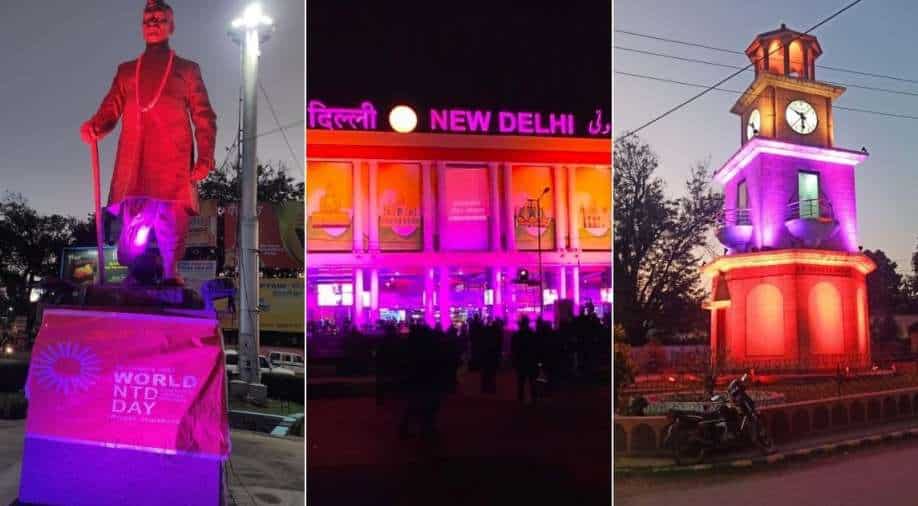
World Neglected Tropical Diseases Day was observed on January 30 to raise awareness for neglected tropical diseases.
This year’s commemoration of World NTD Day was commemorated under the theme ‘Achieving health equity to end the neglect of poverty-related diseases’.
The focus was to strengthen interventions in order to promote equitable health services globally.
India joined over 40 other countries as it illuminated the iconic railway station in the nation’s capital and some other landmarks in purple and orange hues.
The day was observed as the third World NTD Day, which is deemed as a key moment to highlight the global community’s commitment to ending NTDs.
This year, India lit up the New Delhi Railway Station, which is one of the busiest railway stations in the country.
ALSO READ | What are Neglected Tropical Diseases? All you need to know about them
In another Indian state Jharkhand, the renowned Rajendra Circle in city Ranchi and Clock Tower in Godda district were lit up in pink and orange colours in observance of World NTD Day.
The office building of the Department of Health and Family Welfare in Karnataka state was illuminated to mark World NTD Day.
In 2021, 67 landmarks were lit up in 43 cities across 26 countries in a global display of unity to combat NTDs, including Qutub Minar in India.
It’s World Neglected Tropical Diseases Day!
Chagas disease
Chikungunya
Dengue
Dracunculiasis
Leishmaniasis
Leprosy
Elephantiasis
Mycetoma
River blindness
Rabies
Sleeping sickness
Trachoma
…
& other neglected tropical diseases affect 1 BILLION people 🌍!https://t.co/3m4c8TUR4U pic.twitter.com/IsuFXMOQvI— World Health Organization (WHO) (@WHO) January 29, 2022
Neglected tropical diseases (NTDs), such as dengue, lymphatic filariasis, trachoma, and leishmaniasis, are called “neglected,” because they generally afflict the world’s poor and historically have not received as much attention as other diseases.
NTDs are found in several countries in Africa, Asia, and Latin America. NTDs are especially common in tropical areas where people do not have access to clean water or safe ways to dispose of human waste.
Dr Ren Minghui WHO’s Assistant Director-General who leads the Division of Universal Health Coverage/Communicable and Non-Communicable Diseases said celebrating progress reminds us of additional work required to achieve the 2030 Sustainable Development Goals to end the epidemics of NTDs.
He said WHO will continue to work with countries endemic for NTDs and with all partners to help those who are suffering from these preventable diseases and ensure that no one is left behind.
World Neglected Tropical Diseases Day was observed on January 30 to raise awareness for neglected tropical diseases. This year’s commemoration of World NTD Day was commemorated under the theme ‘Achieving health equity to end the neglect of poverty-related diseases’. The focus was to strengthen interventions in order to promote equitable health services globally. India joined over 40 other countries as it illuminated the iconic railway station in the nation’s capital and some other landmarks in purple and orange hues. The day was observed as the third World NTD Day, which is deemed as a key moment to highlight the global community’s commitment to ending NTDs. This year, India lit up the New Delhi Railway Station, which is one of the busiest railway stations in the country. ALSO READ | What are Neglected Tropical Diseases? All you need to know about them In another Indian state Jharkhand, the renowned Rajendra Circle in city Ranchi and Clock Tower in Godda district were lit up in pink and orange colours in observance of World NTD Day. The office building of the Department of Health and Family Welfare in Karnataka state was illuminated to mark World NTD Day. In 2021, 67 landmarks were lit up in 43 cities across 26 countries in a global display of unity to combat NTDs, including Qutub Minar in India. It’s World Neglected Tropical Diseases Day! Chagas disease Chikungunya Dengue Dracunculiasis Leishmaniasis Leprosy Elephantiasis Mycetoma River blindness Rabies Sleeping sickness Trachoma … & other neglected tropical diseases affect 1 BILLION people 🌍!https://t.co/3m4c8TUR4U pic.twitter.com/IsuFXMOQvI — World Health Organization (WHO) (@WHO) January 29, 2022 × Neglected tropical diseases (NTDs), such as dengue, lymphatic filariasis, trachoma, and leishmaniasis, are called “neglected,” because they generally afflict the world’s poor and historically have not received as much attention as other diseases. NTDs are found in several countries in Africa, Asia, and Latin America. NTDs are especially common in tropical areas where people do not have access to clean water or safe ways to dispose of human waste. Dr Ren Minghui WHO’s Assistant Director-General who leads the Division of Universal Health Coverage/Communicable and Non-Communicable Diseases said celebrating progress reminds us of additional work required to achieve the 2030 Sustainable Development Goals to end the epidemics of NTDs. He said WHO will continue to work with countries endemic for NTDs and with all partners to help those who are suffering from these preventable diseases and ensure that no one is left behind.