
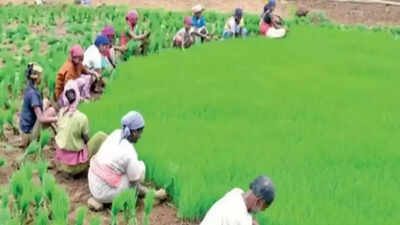
Representative image
NEW DELHI: The Russia-Ukraine war has hit the country’s agriculture sector the hardest with fertiliser prices skyrocketing in the international market, a top government functionary said on Monday, adding this is likely to raise India’s fertiliser subsidy burden alone to upwards of Rs 2 lakh crore this fiscal, about Rs 1 lakh crore more than what has been estimated in the Union Budget for 2022-23.
Fertiliser subsidy in the revised estimate for the previous fiscal ended March 31 was Rs 1.4 lakh crore. Supply chain disruptions due to the Russia-Ukraine conflict is likely to push the burden further by Rs 60,000 crore in the current year as compared to the expenditure last year.
The war and the sanctions on Iran had created supply chain bottlenecks for various inputs required for DAP and urea, making them a scarce commodity and raising international prices.
India continues to import large quantities of these fertilisers for its farm sector.
The war on Ukraine has raised international gas prices by up to 40%. The use of gas is a major component in the manufacturing of urea – almost 70% of the cost. “One of the main ingredients of fertiliser manufacturing is gas. The sanctions on Iran had already disrupted our supply chains and to add to that, the Russia-Ukraine war has further aggravated the situation,” the official said.
However, senior officials of the chemical and fertiliser ministry said the government has purchased 30 lakh tones of DAP and 70 lakh tones of urea, stocking them well ahead of the kharif and rabi seasons to meet requirements for the entire year.
The top official said India has set up several production units across the country and in a few years’ time India will be self-sufficient in fertiliser to meet all its domestic demand. He downplayed the concern expressed by opposition parties that there was scarcity of fertiliser in the country. “It is normal to find queues at fertiliser shops at the start of the season as everyone reaches the dealership at the same time. There is nothing to be concerned about, he assured, saying there is enough stock and supply in the country,” he said.
FOLLOW US ON SOCIAL MEDIA
Representative imageNEW DELHI: The Russia-Ukraine war has hit the country’s agriculture sector the hardest with fertiliser prices skyrocketing in the international market, a top government functionary said on Monday, adding this is likely to raise India’s fertiliser subsidy burden alone to upwards of Rs 2 lakh crore this fiscal, about Rs 1 lakh crore more than what has been estimated in the Union Budget for 2022-23. Fertiliser subsidy in the revised estimate for the previous fiscal ended March 31 was Rs 1.4 lakh crore. Supply chain disruptions due to the Russia-Ukraine conflict is likely to push the burden further by Rs 60,000 crore in the current year as compared to the expenditure last year. The war and the sanctions on Iran had created supply chain bottlenecks for various inputs required for DAP and urea, making them a scarce commodity and raising international prices. India continues to import large quantities of these fertilisers for its farm sector. The war on Ukraine has raised international gas prices by up to 40%. The use of gas is a major component in the manufacturing of urea – almost 70% of the cost. “One of the main ingredients of fertiliser manufacturing is gas. The sanctions on Iran had already disrupted our supply chains and to add to that, the Russia-Ukraine war has further aggravated the situation,” the official said. However, senior officials of the chemical and fertiliser ministry said the government has purchased 30 lakh tones of DAP and 70 lakh tones of urea, stocking them well ahead of the kharif and rabi seasons to meet requirements for the entire year. The top official said India has set up several production units across the country and in a few years’ time India will be self-sufficient in fertiliser to meet all its domestic demand. He downplayed the concern expressed by opposition parties that there was scarcity of fertiliser in the country. “It is normal to find queues at fertiliser shops at the start of the season as everyone reaches the dealership at the same time. There is nothing to be concerned about, he assured, saying there is enough stock and supply in the country,” he said. FOLLOW US ON SOCIAL MEDIA