Ukraine’s State Emergency Service said Wednesday that more than 2,000 civilians have been killed since Russia invaded on Feb. 24. Attacks on civilian areas have increased in the last 48 hours, but the casualty number is impossible to verify.
The big picture: The Russian plan to sprint to Kyiv and force a swift capitulation has faltered under stout Ukrainian resistance. But Russian forces are taking towns and cities, particularly in the south, intensifying their bombardments of cities like Kharkiv in the east, and continuing to funnel forces toward the capital.
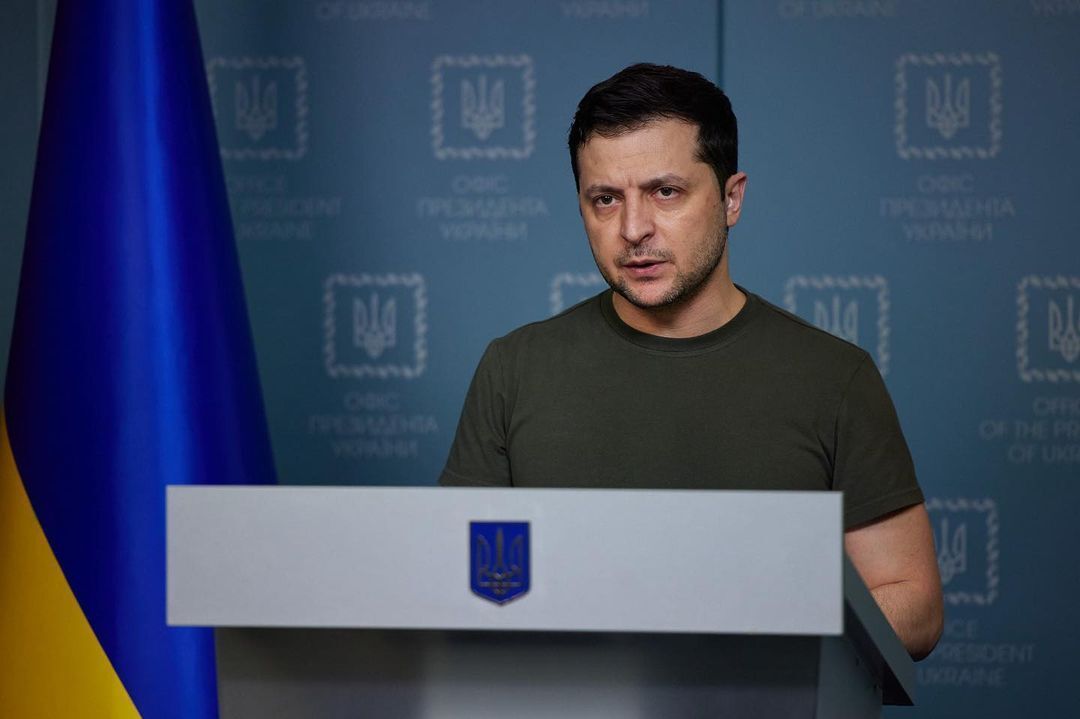
In a defiant address as a seventh day of war began, President Volodymyr Zelensky said the war had unified Ukrainians like nothing before.
- “We forgave each other. We started loving each other. We help each other. We are worried for each other.”
- Zelensky said Ukrainians had not slept for seven nights but would sleep in a peaceful country “after the victory.”
What’s next: Russian President Vladimir Putin’s spokesman said Wednesday that Russia’s delegation was prepared for a second round of peace talks on the Ukraine-Belarus border. Neither side showed much optimism after the first round on Monday.
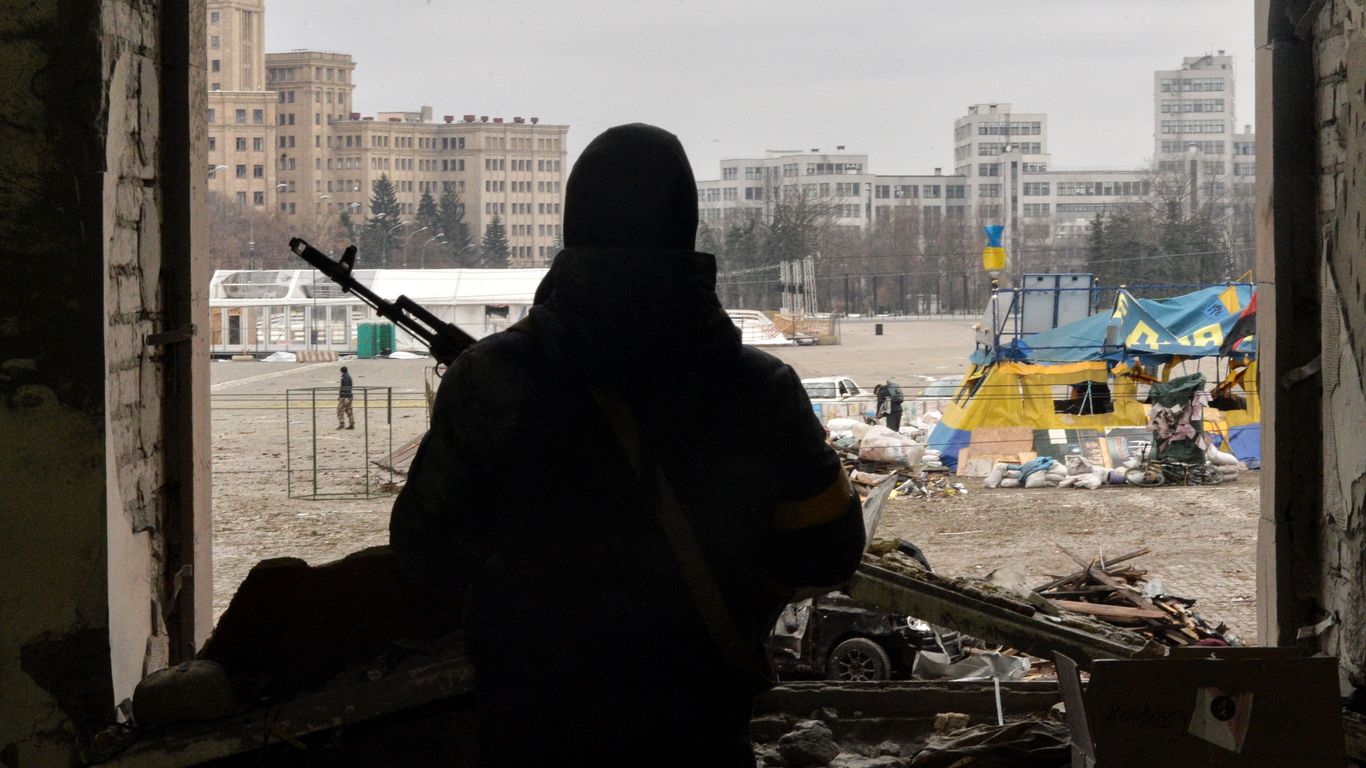
Driving the news: Kharkiv, a Russian-speaking city of 1.4 million, is under heavy attack. Russian airborne troops landed in the city overnight following a day of heavy bombardment that killed at least 21 people, according to Ukrainian officials, and partially destroyed the historic central square.
- Russia claimed control of the Black Sea port city of Kherson on Wednesday, though the mayor posted on Facebook: “We are still Ukraine, stand firm.”
- Mariupol, a southeastern port city of around 500,000, is encircled by Russian troops and “has practically no electricity and centralized heating,” the mayor said on Tuesday.
- Between the lines: A senior Pentagon official said seizing Mariupol and Kharkiv would allow Russia to cut off eastern Ukraine and pin Ukrainian forces away from Kyiv.

Kyiv Mayor Vitaliy Klitschko said Wednesday that there was fighting on the city’s outskirts and told residents to remain indoors but be prepared to defend their city. “The enemy is massing forces closer and closer,” he said. Residents are preparing for a siege.
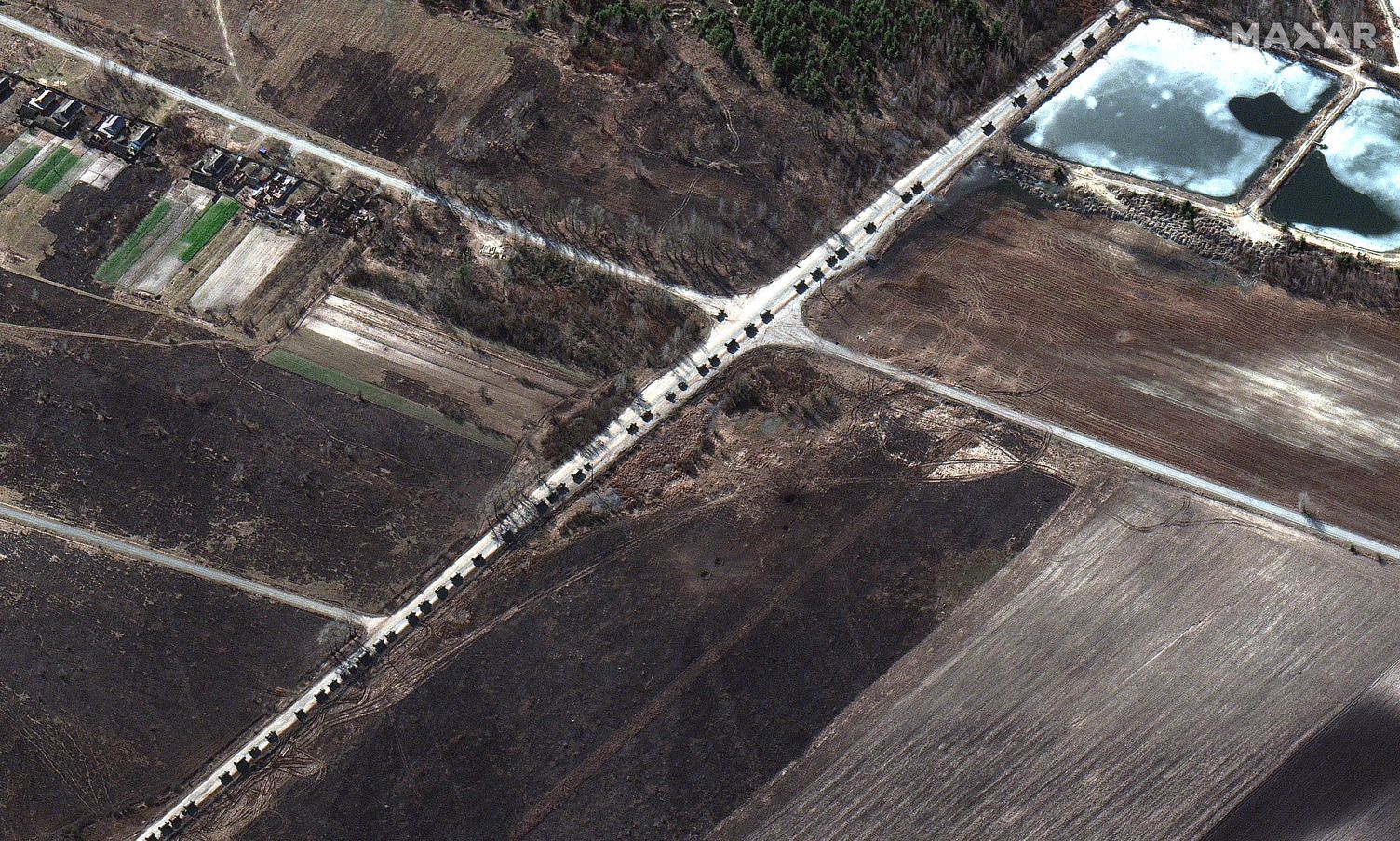
- A Russian convoy of tanks and other military vehicles stretching across 40 miles is approaching the city from the north, and Russian troops are also massing to the West.
- A strike on Kyiv’s TV tower on Tuesday killed at least five civilians, knocked out local TV stations, and damaged the Babyn Yar Holocaust memorial. Zelensky, who is Jewish, said Russian forces had “an order to erase our history” and called on Jews around the world to resist.
Residents in cities across Ukraine have put their bodies in front of tanks and shouted at Russian troops to go home. In the town of Enerhodar, home to Europe’s largest nuclear power plant, residents are barricading the streets.
- U.S. and Ukrainian officials say Russian troops never expected to be ordered into Ukraine and many are demoralized, even abandoning equipment without a fight in some cases.
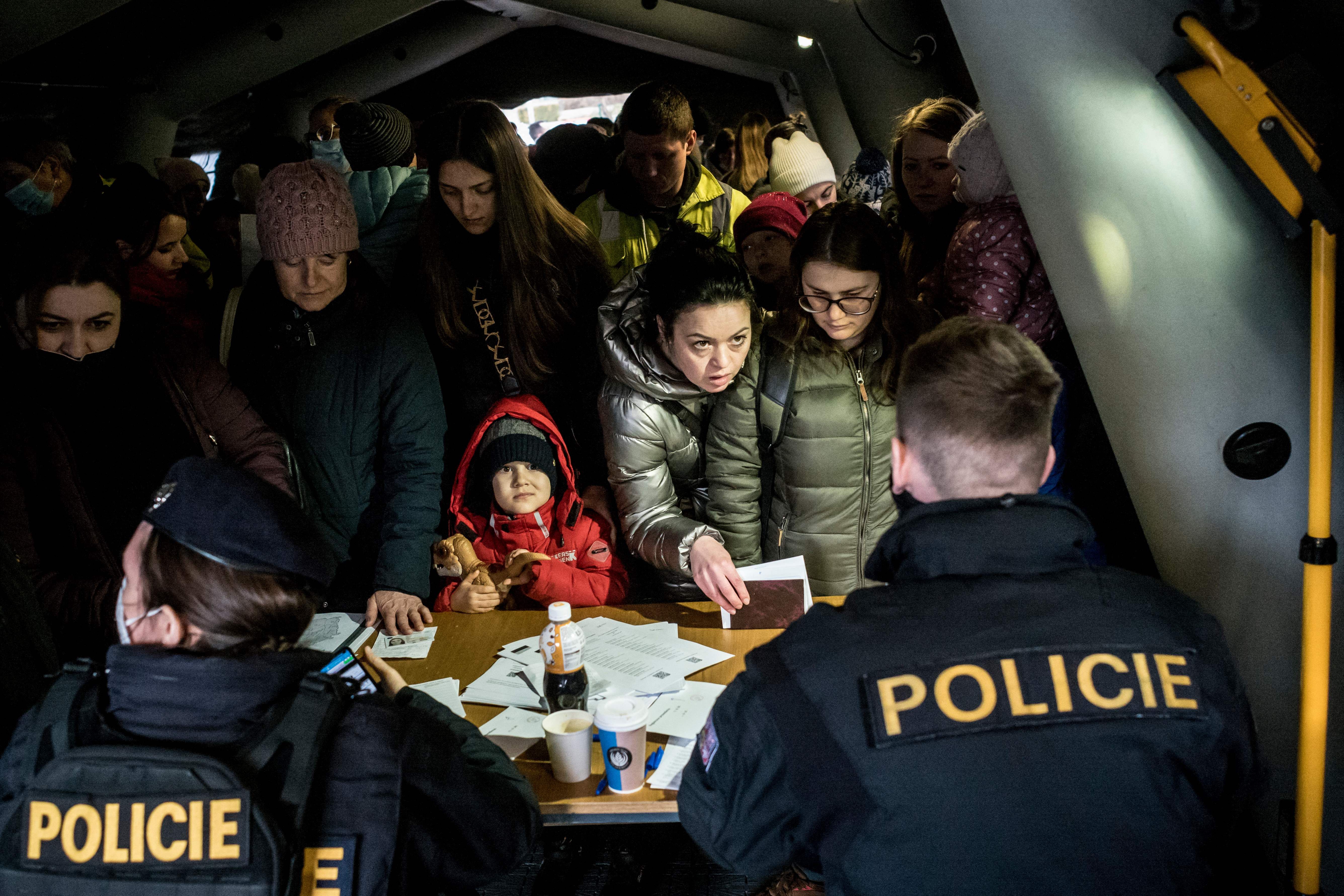
660,000 Ukrainians have fled to neighboring countries, the UN estimated Tuesday.
- The EU is planning to allow Ukrainian refugees to live and work in the bloc for up to three years.
- But there have been heartbreaking scenes in cities like Kyiv as fleeing families have been separated or struggled to squeeze into over-packed trains.
In Russia, citizens are watching their savings deplete as the ruble crashes and losing access to everything from new iPhones to Disney films to flights to Europe. The Russian stock market remains closed but investors are desperate to get their money out, and Shell on Tuesday became the latest oil major to announce an exit.
- Alexei Navalny, the jailed opposition leader, called Wednesday for protests in the main square of every Russian city at 2pm on weekends and 7pm on weeknights.
- Russian authorities have vowed to arrest anyone who protests but there have still been significant gatherings in Moscow and St. Petersburg.
What else is happening: Ukrainian authorities claimed they had foiled an assassination plot against Zelensky by a unit of elite Chechen special forces, in part thanks to tips from members of Russia’s Federal Security Service who do not support the war. That claim could not be verified.
- Zelensky is pushing for an accelerated acceptance into the European Union, which he says would be a signal that Europe accepted Ukraine as an equal member. It would also be an economic boon after the war.
- He’s also pleading with NATO for a no-fly zone, but that would force NATO to shoot down Russian troops and risk a far wider conflict between nuclear powers.
Russian officials are already making vague threats of a wider war.
- Former President Dmitry Medvedev tweeted a warning that “in human history, economic wars quite often turned into real ones,” while Foreign Minister Sergei Lavrov warned that a third world war would turn into a nuclear war.
- Putin has already put Russia’s nuclear deterrence force on alert, citing the sanctions and “aggressive language” from the West.
- The U.S. and European allies are scrambling to get weapons through Poland to the front while they still can. Moscow has said that it will hold countries that supply weapons used on Russian troops responsible.
What to watch: With Russia closing in on Ukraine’s largest cities and employing newly aggressive tactics, such as the bombing of civilian areas, the danger to civilians is growing.
- With peace talks currently showing little likelihood of success, analysts and officials are considering what off-ramps might still be available.
- The UN General Assembly is expected to vote Wednesday afternoon on a resolution condemning Russia’s invasion. Over 90 countries have agreed to co-sponsor it, Axios is told.
Ukraine’s State Emergency Service said Wednesday that more than 2,000 civilians have been killed since Russia invaded on Feb. 24. Attacks on civilian areas have increased in the last 48 hours, but the casualty number is impossible to verify.The big picture: The Russian plan to sprint to Kyiv and force a swift capitulation has faltered under stout Ukrainian resistance. But Russian forces are taking towns and cities, particularly in the south, intensifying their bombardments of cities like Kharkiv in the east, and continuing to funnel forces toward the capital.In a defiant address as a seventh day of war began, President Volodymyr Zelensky said the war had unified Ukrainians like nothing before.”We forgave each other. We started loving each other. We help each other. We are worried for each other.”Zelensky said Ukrainians had not slept for seven nights but would sleep in a peaceful country “after the victory.”What’s next: Russian President Vladimir Putin’s spokesman said Wednesday that Russia’s delegation was prepared for a second round of peace talks on the Ukraine-Belarus border. Neither side showed much optimism after the first round on Monday.Zelensky gives an address. Photo: Presidency of Ukraine handout via GettyDriving the news: Kharkiv, a Russian-speaking city of 1.4 million, is under heavy attack. Russian airborne troops landed in the city overnight following a day of heavy bombardment that killed at least 21 people, according to Ukrainian officials, and partially destroyed the historic central square.Russia claimed control of the Black Sea port city of Kherson on Wednesday, though the mayor posted on Facebook: “We are still Ukraine, stand firm.”Mariupol, a southeastern port city of around 500,000, is encircled by Russian troops and “has practically no electricity and centralized heating,” the mayor said on Tuesday.Between the lines: A senior Pentagon official said seizing Mariupol and Kharkiv would allow Russia to cut off eastern Ukraine and pin Ukrainian forces away from Kyiv.Kyiv Mayor Vitaliy Klitschko said Wednesday that there was fighting on the city’s outskirts and told residents to remain indoors but be prepared to defend their city. “The enemy is massing forces closer and closer,” he said. Residents are preparing for a siege.A Russian convoy of tanks and other military vehicles stretching across 40 miles is approaching the city from the north, and Russian troops are also massing to the West.A strike on Kyiv’s TV tower on Tuesday killed at least five civilians, knocked out local TV stations, and damaged the Babyn Yar Holocaust memorial. Zelensky, who is Jewish, said Russian forces had “an order to erase our history” and called on Jews around the world to resist.Sheltering in the Kyiv metro. Photo: Aris Messinis/STF/AFP via GettyResidents in cities across Ukraine have put their bodies in front of tanks and shouted at Russian troops to go home. In the town of Enerhodar, home to Europe’s largest nuclear power plant, residents are barricading the streets.U.S. and Ukrainian officials say Russian troops never expected to be ordered into Ukraine and many are demoralized, even abandoning equipment without a fight in some cases.660,000 Ukrainians have fled to neighboring countries, the UN estimated Tuesday.The EU is planning to allow Ukrainian refugees to live and work in the bloc for up to three years.But there have been heartbreaking scenes in cities like Kyiv as fleeing families have been separated or struggled to squeeze into over-packed trains.Ukrainian refugees apply for residency permits after arriving in Prague. Photo: Michal Cizek/AFP via Getty ImagesIn Russia, citizens are watching their savings deplete as the ruble crashes and losing access to everything from new iPhones to Disney films to flights to Europe. The Russian stock market remains closed but investors are desperate to get their money out, and Shell on Tuesday became the latest oil major to announce an exit.Alexei Navalny, the jailed opposition leader, called Wednesday for protests in the main square of every Russian city at 2pm on weekends and 7pm on weeknights.Russian authorities have vowed to arrest anyone who protests but there have still been significant gatherings in Moscow and St. Petersburg.What else is happening: Ukrainian authorities claimed they had foiled an assassination plot against Zelensky by a unit of elite Chechen special forces, in part thanks to tips from members of Russia’s Federal Security Service who do not support the war. That claim could not be verified.Zelensky is pushing for an accelerated acceptance into the European Union, which he says would be a signal that Europe accepted Ukraine as an equal member. It would also be an economic boon after the war.He’s also pleading with NATO for a no-fly zone, but that would force NATO to shoot down Russian troops and risk a far wider conflict between nuclear powers.Russian convoy north of Kyiv. Satellite image Photo: ©2022 Maxar TechnologiesRussian officials are already making vague threats of a wider war.Former President Dmitry Medvedev tweeted a warning that “in human history, economic wars quite often turned into real ones,” while Foreign Minister Sergei Lavrov warned that a third world war would turn into a nuclear war.Putin has already put Russia’s nuclear deterrence force on alert, citing the sanctions and “aggressive language” from the West.The U.S. and European allies are scrambling to get weapons through Poland to the front while they still can. Moscow has said that it will hold countries that supply weapons used on Russian troops responsible.What to watch: With Russia closing in on Ukraine’s largest cities and employing newly aggressive tactics, such as the bombing of civilian areas, the danger to civilians is growing.With peace talks currently showing little likelihood of success, analysts and officials are considering what off-ramps might still be available.The UN General Assembly is expected to vote Wednesday afternoon on a resolution condemning Russia’s invasion. Over 90 countries have agreed to co-sponsor it, Axios is told.