

1/5

An Astra Space rocket is prepared to launch from Florida on Monday. Photo courtesy of Astra Space
ORLANDO, Fla., Feb. 7 (UPI) — Small launch company Astra Space plans to try again Monday to launch for the first time from Florida after ground equipment failure postponed an attempt on Saturday.
If successful, the California-based space company would become the first new rocket company to launch from Florida since SpaceX began launching from the state over a decade ago.
The U.S. Space Force forecasts a 10% chance that clouds could prompt a weather-related delay.
Astra plans for its small rocket to lift off during a three-hour window starting at 1 p.m. EST from Complex 46 at Cape Canaveral Space Force Station. The company previously tested its rocket in California and launched from Alaska.
The company has mounted four very small satellites, or CubeSats, on the rocket as designed by NASA and university students. The spacecraft are to conduct space experiments under a 2020 NASA contract award of $3.9 million to Astra.
NASA’s mission name for the spaceflight is ELaNa 41, which stands for Educational Launch of Nanosatellites.
Astra has a fast-tracked Federal Aviation Administration license for the launch under a new rule that attempts to streamline the licensing process.
Astra plans to provide a link on its website, Astra.com, for a livestream of the launch beginning at 12 noon EST.
The satellites are:
— BAMA-1, designed by University of Alabama, to test a type of spacecraft sail that would create drag in the upper atmosphere, leading to rapid deorbiting of the craft.
— INCA, designed by New Mexico State University, which stands for Ionospheric Neutron Content Analyzer and will study the neutron spectrum in low-Earth orbit.
— QubeSat, by University of California, Berkeley, which will test and characterize the effects of certain conditions on quantum gyroscopes in space.
— R5-S1, designed by NASA’s Johnson Space Center in Houston to demonstrate a fast and cost-effective way to build very small satellites by demonstrating some in-space camera inspection.
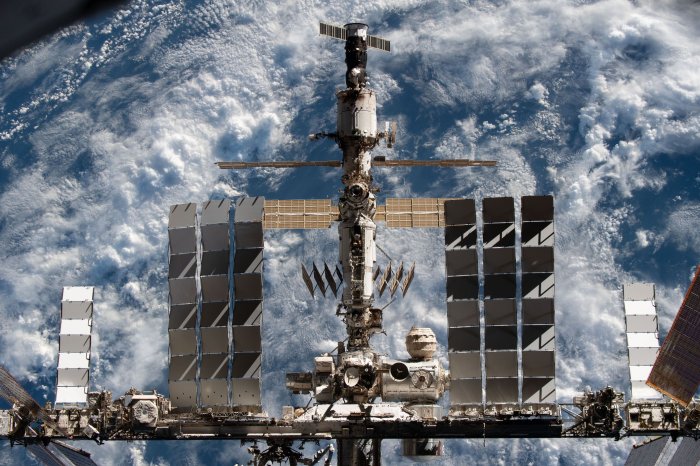
The International Space Station is pictured from the SpaceX Crew Dragon Endeavour during a flyaround of the orbiting lab that took place following its undocking from the Harmony module’s space-facing port on November 8. Photo courtesy of NASA
1/5 An Astra Space rocket is prepared to launch from Florida on Monday. Photo courtesy of Astra Space ORLANDO, Fla., Feb. 7 (UPI) — Small launch company Astra Space plans to try again Monday to launch for the first time from Florida after ground equipment failure postponed an attempt on Saturday. If successful, the California-based space company would become the first new rocket company to launch from Florida since SpaceX began launching from the state over a decade ago. The U.S. Space Force forecasts a 10% chance that clouds could prompt a weather-related delay. Astra plans for its small rocket to lift off during a three-hour window starting at 1 p.m. EST from Complex 46 at Cape Canaveral Space Force Station. The company previously tested its rocket in California and launched from Alaska. The company has mounted four very small satellites, or CubeSats, on the rocket as designed by NASA and university students. The spacecraft are to conduct space experiments under a 2020 NASA contract award of $3.9 million to Astra. NASA’s mission name for the spaceflight is ELaNa 41, which stands for Educational Launch of Nanosatellites. Astra has a fast-tracked Federal Aviation Administration license for the launch under a new rule that attempts to streamline the licensing process. Astra plans to provide a link on its website, Astra.com, for a livestream of the launch beginning at 12 noon EST. The satellites are: — BAMA-1, designed by University of Alabama, to test a type of spacecraft sail that would create drag in the upper atmosphere, leading to rapid deorbiting of the craft. — INCA, designed by New Mexico State University, which stands for Ionospheric Neutron Content Analyzer and will study the neutron spectrum in low-Earth orbit. — QubeSat, by University of California, Berkeley, which will test and characterize the effects of certain conditions on quantum gyroscopes in space. — R5-S1, designed by NASA’s Johnson Space Center in Houston to demonstrate a fast and cost-effective way to build very small satellites by demonstrating some in-space camera inspection. The International Space Station is pictured from the SpaceX Crew Dragon Endeavour during a flyaround of the orbiting lab that took place following its undocking from the Harmony module’s space-facing port on November 8. Photo courtesy of NASA